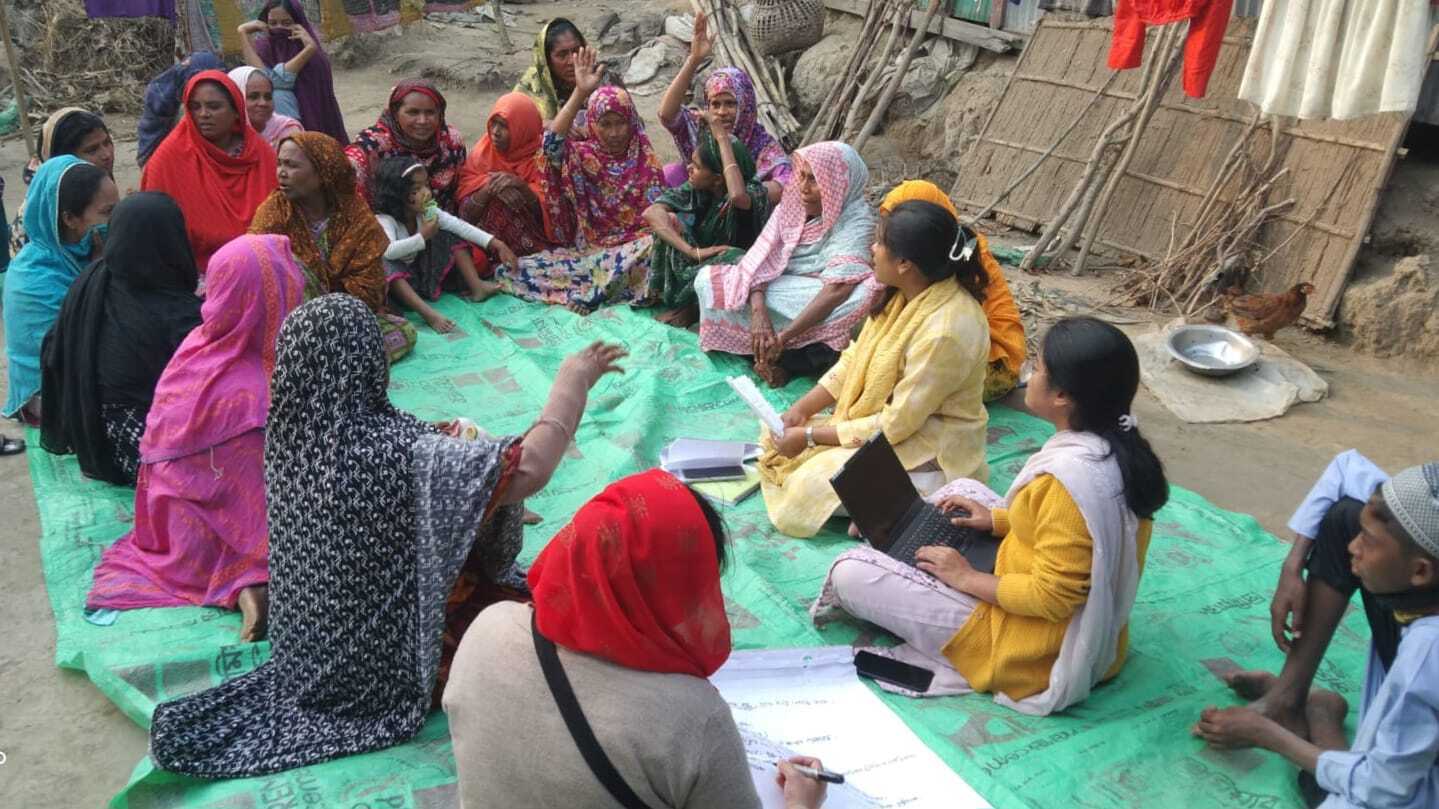
The SHISUK (Shikkha Shastha Unnayan Karzakram’s) community-led agroecology initiative in Daudkandi, Cumilla region, which has established 1,000 homestead gardens across 20 villages, driven by over 400 women.
The Problem It Set Out to Solve: Decades of chemical-dependent farming (inherited from Bangladesh’s Green Revolution) left soils degraded, reduced pollinator populations, and exposed farming families to health risks from pesticides.
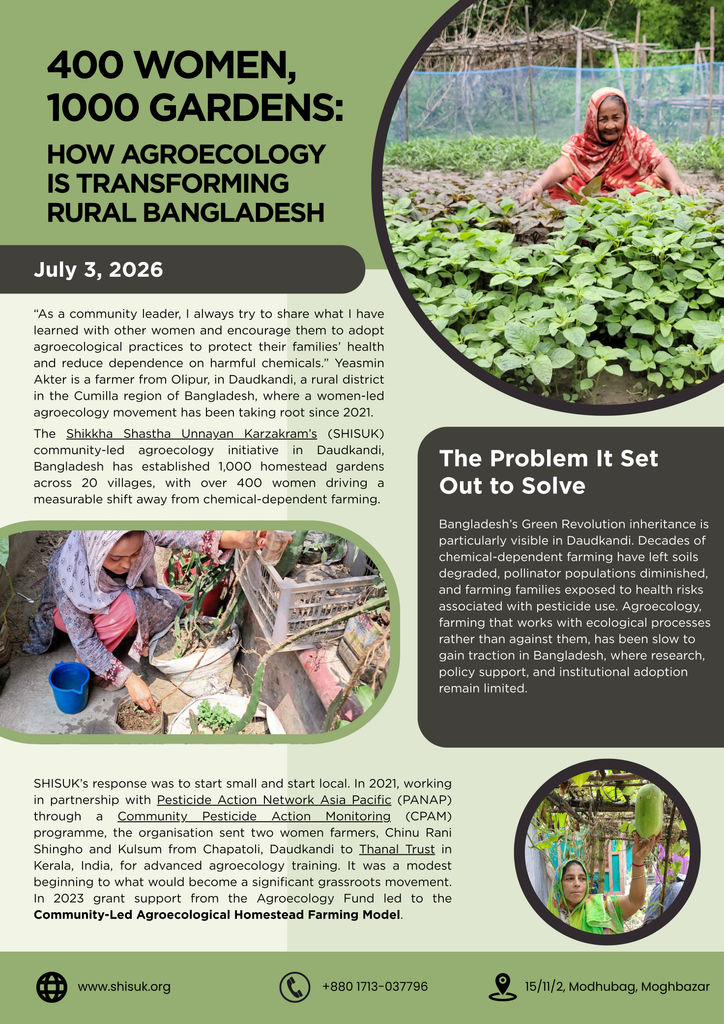
Key Milestones & Background:
- The women-led agroecology movement has been taking root since 2021.
- In 2021, working with Pesticide Action Network Asia Pacific (PANAP) through a Community Pesticide Action Monitoring (CPAM) programme, SHISUK sent two women farmers (Chinu Rani Shingho and Kulsum from Chapatoli, Daudkandi) to Thanal Trust in Kerala, India, for advanced agroecology training.
- In 2023, grant support from the Agroecology Fund led to the Community-Led Agroecological Homestead Farming Model.
Here is a detailed breakdown of the second page of the document:
Building from the Ground Up
- Demonstration Plots & Bio-Villages: The initiative began with pesticide-free demonstration plots managed by community members rather than external experts. By 2022, the initiative expanded to 20 “bio-villages,” each governed by a group of 20 lead women farmers driving the transition.
- Governance Structure: Each bio-village committee takes responsibility for demonstration farming, seed banking, knowledge exchange, and market linkages. SHISUK acts as a technical partner and catalyst rather than a direct authority.
- Field Learning Sites (“Living Classrooms”): SHISUK created community-managed demonstration farms that double as knowledge hubs. These sites attract policymakers, NGO staff, university students, and neighbouring communities.
What the Model Looks Like in Practice
- Four Core Focus Areas:
- Organic composting and vermicompost production.
- Seed banking and exchange.
- Natural pest and disease management.
- Diversified homestead gardening.
- Economic & Nutritional Impact:
- Homestead Gardens: Households grow a variety of fruits and vegetables using locally made compost and natural pest management instead of purchased chemical inputs.
- Market & Surplus Sales: Surplus produce is sold to neighbours using the Participatory Guarantee System (PGS), creating direct economic incentives.
- Vermicompost Enterprise: Women produce and sell vermicompost (compost produced using earthworms) as an independent enterprise, generating a direct income stream tied to soil health.
- Household Security: Nutrition planning workshops complement farming shifts to enhance household food security.