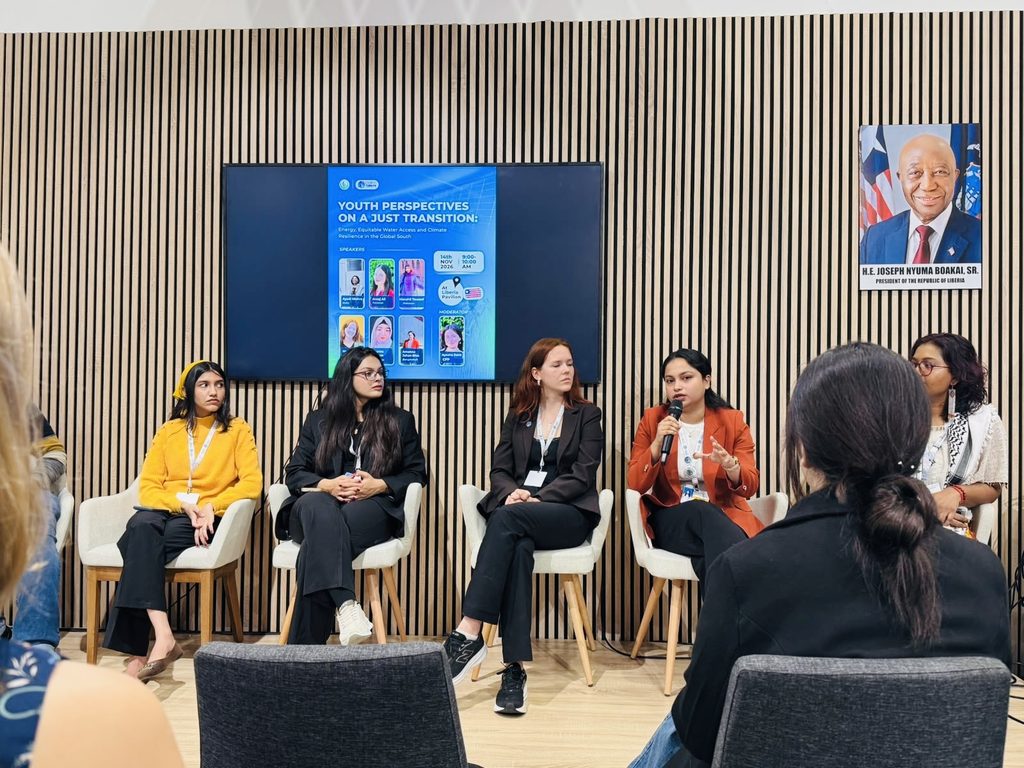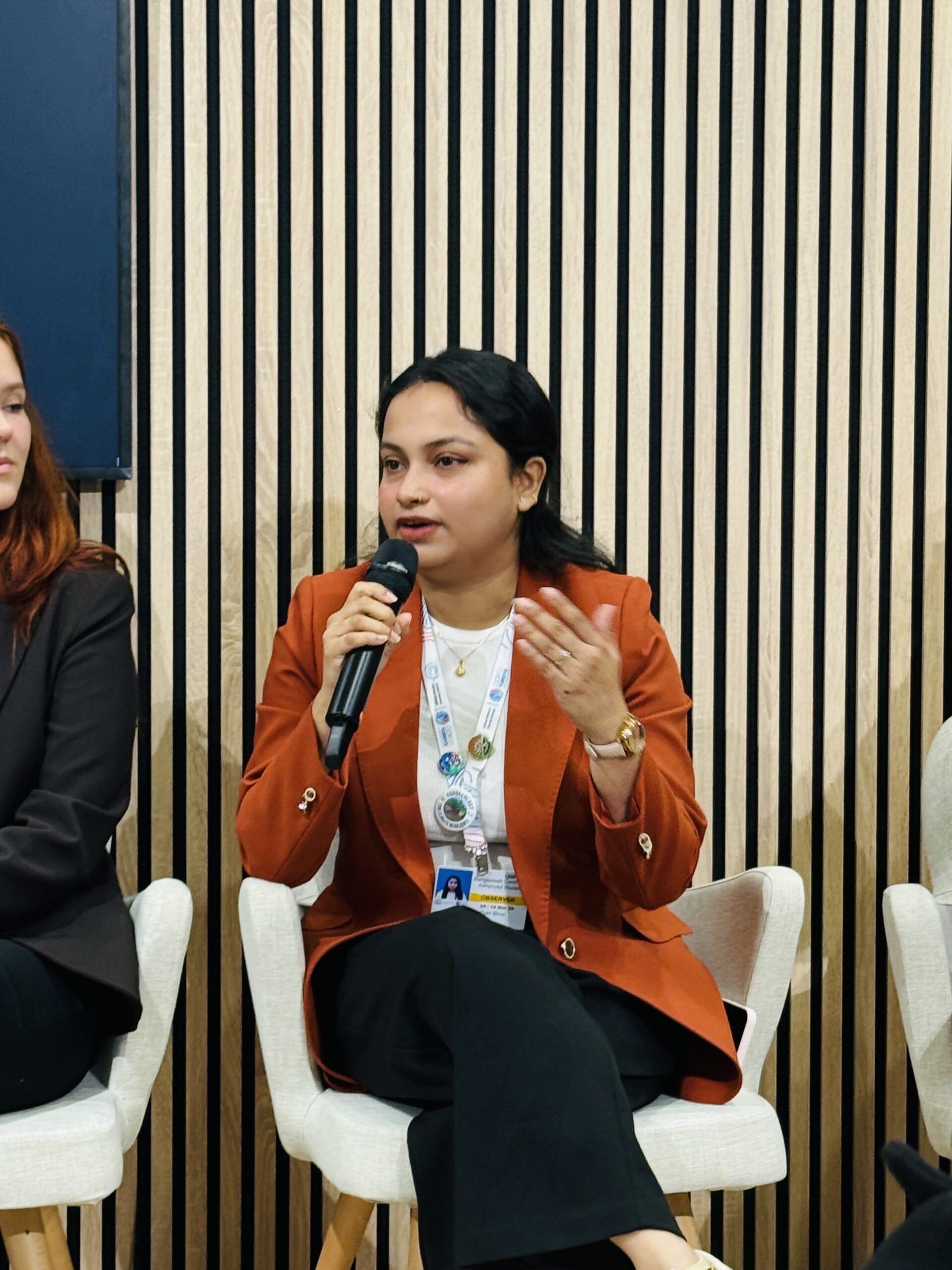
Amanna Jahan Biva, Research Associate at Shisuk, represented Bangladesh as a panellist at a COP31 side event titled “Youth Perspectives on a Just Transition: Energy, Equitable Water Access and Climate Resilience in the Global South.” Held on 14 November 2026 from 9:00 AM to 10:00 AM at the Liberia Pavilion, the session convened young leaders from across Asia and the Global South to examine how clean energy transitions and equitable water governance can respond to the realities of climate-vulnerable communities.
Connecting Local Realities with Global Climate Policy
As international climate negotiations increasingly focus on accelerating renewable energy deployment and strengthening climate adaptation, ensuring that these transitions remain fair for frontline communities has emerged as a central policy priority. For climate-exposed, agrarian countries such as Bangladesh, energy access, water security, and rural livelihoods are closely interlinked.
Attending COP31 as a UNFCCC Observer and representative from Bangladesh, Biva underscored the importance of grounding global climate frameworks in the lived experiences of rural populations. Rather than treating energy and water systems solely as technical infrastructure challenges, the discussion examined how social equity, affordability, and local governance determine whether communities benefit from climate action.
Collective Resource Management and Gender-Inclusive Governance
During her intervention on the panel, Biva highlighted the limitations of individualised energy investments in rural agricultural settings. She emphasised the need to move beyond fragmented, household-level models toward collective infrastructure and shared resource management that work economically for smallholder farmers. Where individual farmers often face steep upfront financial barriers, community-based approaches can make clean energy and water infrastructure more affordable, durable, and accessible over time.
Biva also stressed that a genuinely just transition requires women’s meaningful participation in decision-making. Across rural Bangladesh and the wider Global South, women play critical roles in water management, agriculture, and household resilience, yet they frequently remain underrepresented in formal resource governance. Integrating women into planning and management structures is therefore essential to ensuring equitable outcomes from energy and water initiatives.
Regional Youth Exchange Across Asia
The side event brought together five panellists on stage for an interactive exchange comparing national contexts and grassroots priorities across Asia. Alongside presenting perspectives from Bangladesh, Biva engaged with fellow youth panellists from other Asian countries to reflect on both the distinct realities and the shared structural challenges facing communities across the region.
The dialogue demonstrated the value of cross-border peer learning in strengthening youth-led climate advocacy, enabling emerging practitioners to identify common priorities around decentralised energy, fair water allocation, and community-led resilience.
Advancing Shisuk’s Commitment to Community-Led Resilience
Shisuk’s participation in the COP31 side event reflects the organisation’s continuing commitment to amplifying grassroots voices, fostering youth engagement, and supporting inclusive, community-centred approaches to climate resilience and sustainable resource management. By bringing insights from Bangladesh’s smallholder and rural contexts into international forums, Shisuk works to connect local development practice with global climate policy dialogue.
As international frameworks on just transition continue to evolve, the perspectives shared during the session reinforce the need for climate finance, energy planning, and water governance models that prioritise collective community benefit and inclusive local leadership.