ANTALYA, TÜRKİYE / DHAKA, BANGLADESH
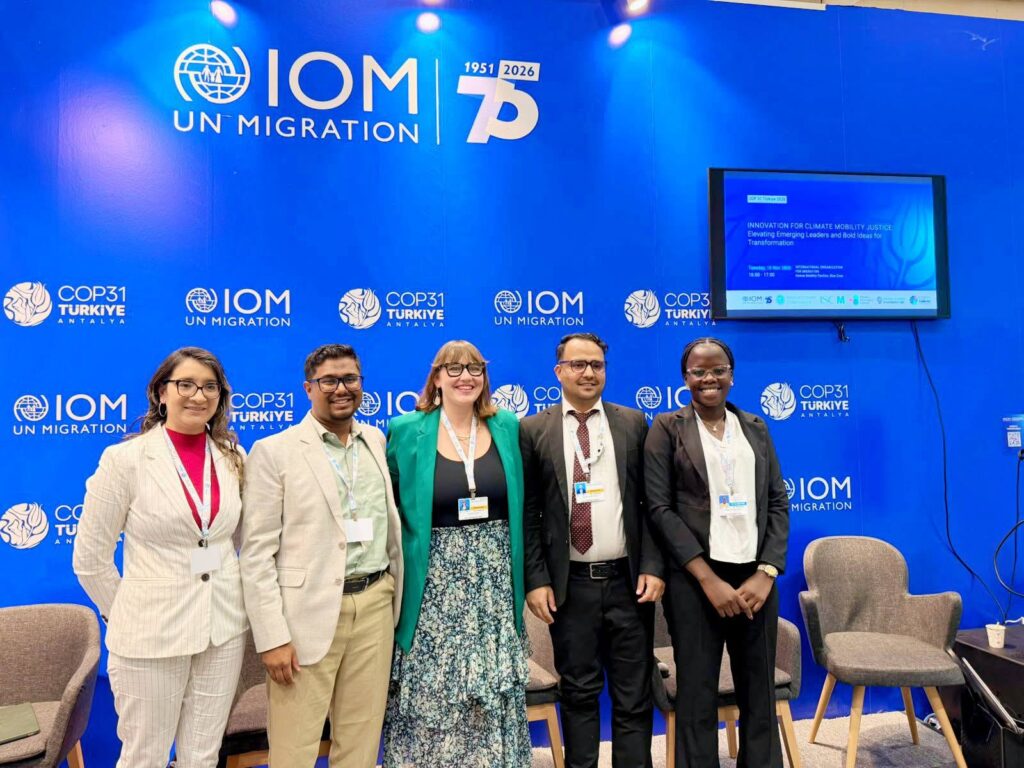
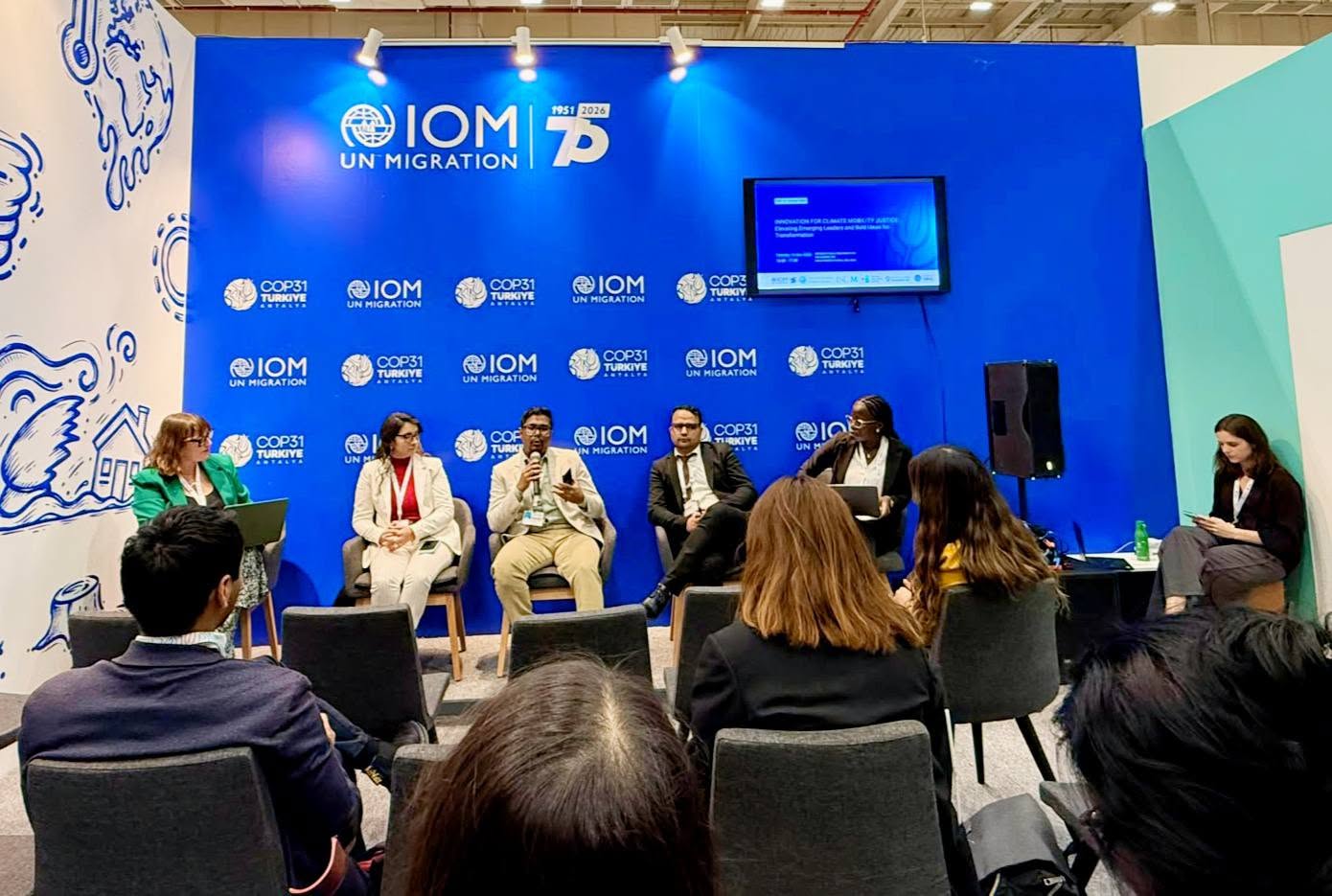
As global climate negotiations address the growing challenge of climate-induced displacement, SHISUK (Shikkha Shastha Unnayan Karzakram) brought grassroots evidence from Bangladesh’s floodplains to the international policy stage at the 31st UN Climate Change Conference (COP31). On Tuesday, 10 November 2026, from 16:00 to 17:00, SHISUK Senior Research Officer Raisul Safkat served as a featured panellist at the side event titled “Innovation for Climate Mobility Justice: Elevating Emerging Leaders and Bold Ideas for Transformation”.
Held at the International Organization for Migration (IOM) Human Mobility Pavilion in the Blue Zone in Antalya, Türkiye, the session examined forward-looking strategies to address human mobility in an era of intensifying climate disruption. Organised by the Beyond Climate Collaborative in partnership with the Othering & Belonging Institute, the Climate Mobility Innovation Lab, and ISCM, the dialogue convened emerging leaders and practitioners to explore equitable, community-centred responses to climate mobility.
Rethinking Climate Mobility Through Community-Led Adaptation
In climate-vulnerable countries such as Bangladesh, recurring floods, river erosion, and shifting weather patterns increasingly pressure rural populations to migrate. However, international discourse often frames affected populations solely as passive victims awaiting humanitarian relief or relocation.
Addressing the panel at the IOM Pavilion, Raisul Safkat challenged this conventional narrative by drawing on SHISUK’s nearly three decades of field implementation in rural development and its pioneering Community Enterprise Approach (CEA). Central to SHISUK’s intervention was a clear policy distinction: disaster management and climate mobility solutions are not the same.
While traditional disaster management focuses on short-term preparedness, emergency relief, and immediate post-crisis response, addressing the root causes of climate-induced mobility requires sustained investment in local adaptive capacities, collective governance, and resilient rural livelihoods.
The Daudkandi Model: Turning Vulnerability into Opportunity
To illustrate how grassroots governance can stabilise climate-vulnerable regions, Safkat presented the Daudkandi model of community-based adaptation in Cumilla, Bangladesh. Initiated by SHISUK in the mid-1990s, the Daudkandi model demonstrates how seasonal floodwaters—once a driver of crop loss and rural economic distress—can be transformed into a productive common-pool resource through collective floodplain aquaculture management.
During the session, Safkat outlined three foundational pillars of SHISUK’s approach to building in-situ community resilience:
- Collective Management of Common-Pool Resources: Organising local residents into inclusive, self-governing institutions where landowners and landless households jointly manage seasonal floodplains.
- Community Ownership and Enterprise: Establishing self-financing community enterprises that generate equitable economic returns without permanent dependence on external donor grants.
- Resilient Livelihood Opportunities: Creating local employment and income streams that reduce the economic compulsion for distress migration.
When rural communities organise, manage ecological resources collectively, and generate local economic opportunities, they strengthen their capacity to live with changing environmental conditions. This collective self-reliance directly reduces the socio-economic pressures that drive forced and climate-imposed mobility.
Collaborative Global Dialogue on Human Mobility
The panel session featured five international speakers and moderators at the IOM Human Mobility Pavilion, marking the 75th anniversary of IOM (1951–2026). Alongside representatives facilitated by the Beyond Climate Collaborative, the Othering & Belonging Institute, the Climate Mobility Innovation Lab, and ISCM, SHISUK contributed empirical insights from South Asia’s agrarian and floodplain landscapes.
By connecting the lived experiences of Daudkandi’s floodplain communities with global policy discussions on migration and climate justice, SHISUK emphasised that affected populations must be recognised as active agents of adaptation and institutional transformation.
Anchoring Dignity and Opportunity in Local Communities
For SHISUK, strengthening rural resilience is not merely a technical exercise in preventing displacement. Since its founding in 1994, the organisation has worked across Bangladesh to advance safe migration, community enterprise, agroecology, and women’s and youth empowerment.
As emphasised during the COP31 intervention in Antalya, true climate mobility justice means creating the socio-economic and ecological conditions for people to live with dignity, security, and opportunity within their own communities—ensuring that staying is a viable, prosperous choice rather than a struggle for survival.