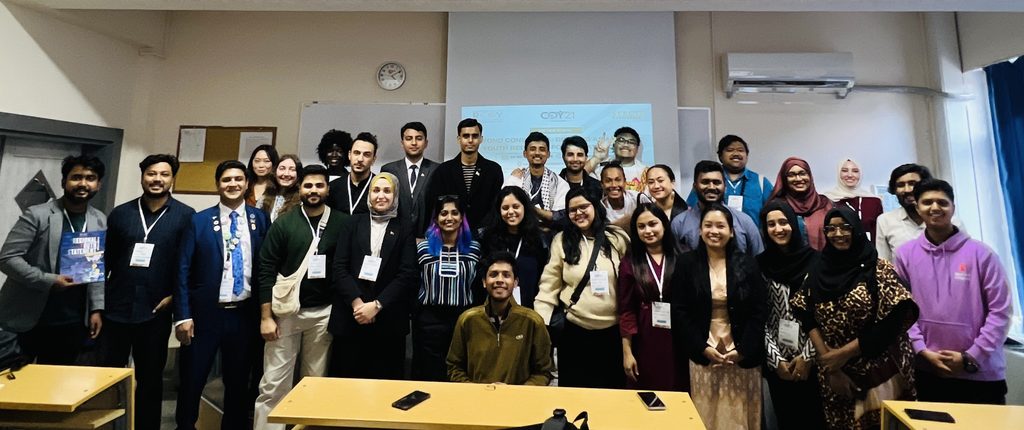
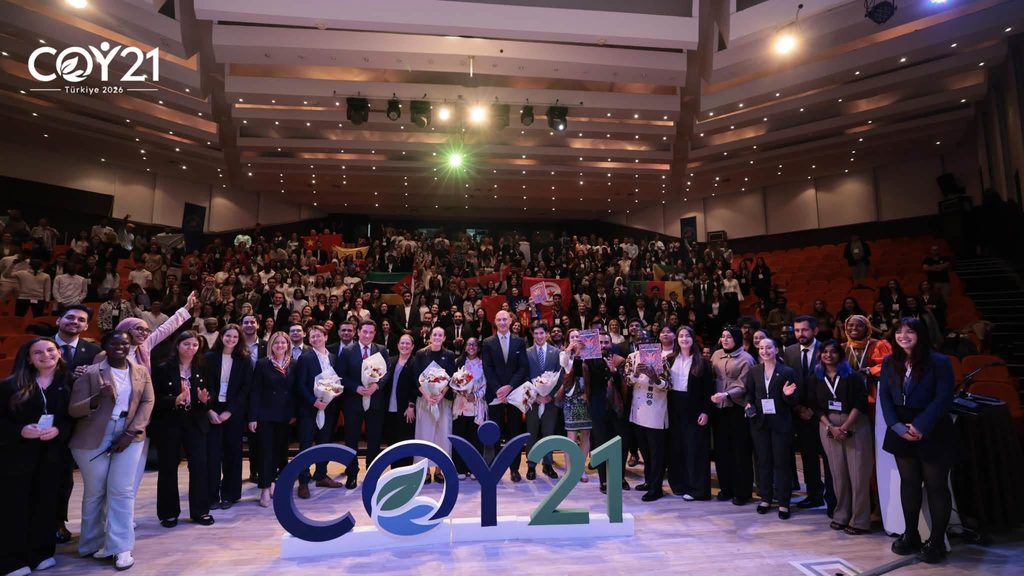
Amanna Jahan Biva, Research Associate at SHISUK, represented grassroots development perspectives from Bangladesh at the 21st UN Climate Change Conference of Youth (COY21), held from 5 to 7 November 2026 at Akdeniz University in Antalya, Türkiye. Participating alongside young climate advocates from across the Asia-Pacific region and beyond, Biva contributed to policy dialogues focused on shaping collective youth priorities ahead of the 31st UN Climate Change Conference (COP31).
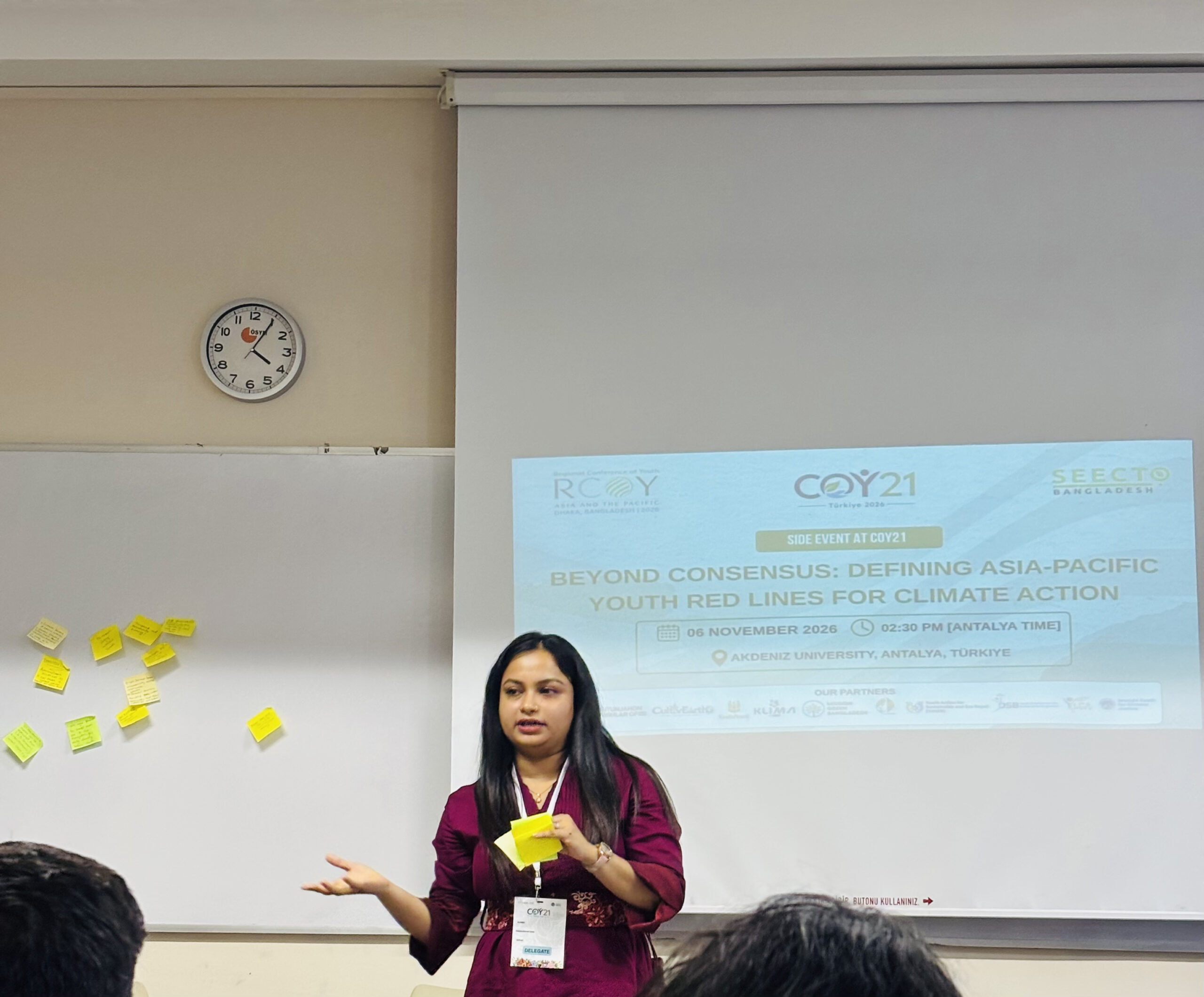
A central highlight of her participation was the side event titled “Beyond Consensus: Defining Asia-Pacific Youth Red Lines for Climate Action,” convened on 6 November 2026 at Akdeniz University. Organised by the Regional Conference of Youth (RCOY) Asia-Pacific 2026 and SEECTO Bangladesh, with Youth Leading Climate Action (YLCA) joining as a partner, the session brought young practitioners together to establish non-negotiable regional priorities for equitable climate governance.
Grounding Climate Action in Local Communities and Agroecology
During the interactive workshop, which incorporated participatory mapping exercises with regional delegates, Biva emphasised that effective climate responses must be anchored in local, community-led approaches. Drawing on development realities in climate-vulnerable regions, she argued that communities on the front lines of environmental change must directly shape the policies and programmes that affect their livelihoods.
Her intervention highlighted three interconnected priorities for the Asia-Pacific youth agenda:
- Community-Led Governance: Ensuring local communities hold genuine agency in designing and implementing climate adaptation and mitigation strategies rather than remaining passive recipients of external projects.
- Targeted Climate Finance: Redirecting climate funds toward practical, sustainable solutions that deliver long-term ecological and economic resilience at the local level.
- Agroecology for Food Sovereignty: Positioning agroecology as a core pathway to strengthen food sovereignty, protect smallholder farming systems, and reduce dependence on environmentally damaging agricultural inputs.
Strengthening Collective Youth Advocacy Ahead of COP31
Beyond the regional side event, COY21 provided a platform for cross-regional exchange among youth delegates examining how regional youth demands can translate into formal policy influence within United Nations climate negotiations. Through working group discussions and peer networking, participants explored practical mechanisms to coordinate advocacy across countries and elevate grassroots priorities into global decision-making spaces.
For SHISUK, engaging in international youth and climate policy forums complements its long-standing commitment to community-driven development, agroecological practice, food sovereignty, and youth mobilisation in Bangladesh. By connecting local community experience with regional youth networks, SHISUK continues to support collaborative approaches that place rural producers and young leaders at the centre of sustainable climate action.