SHISUK Research Associate Represents RCOY APAC 2026 at COP31 Global Youth Statement Roundtable
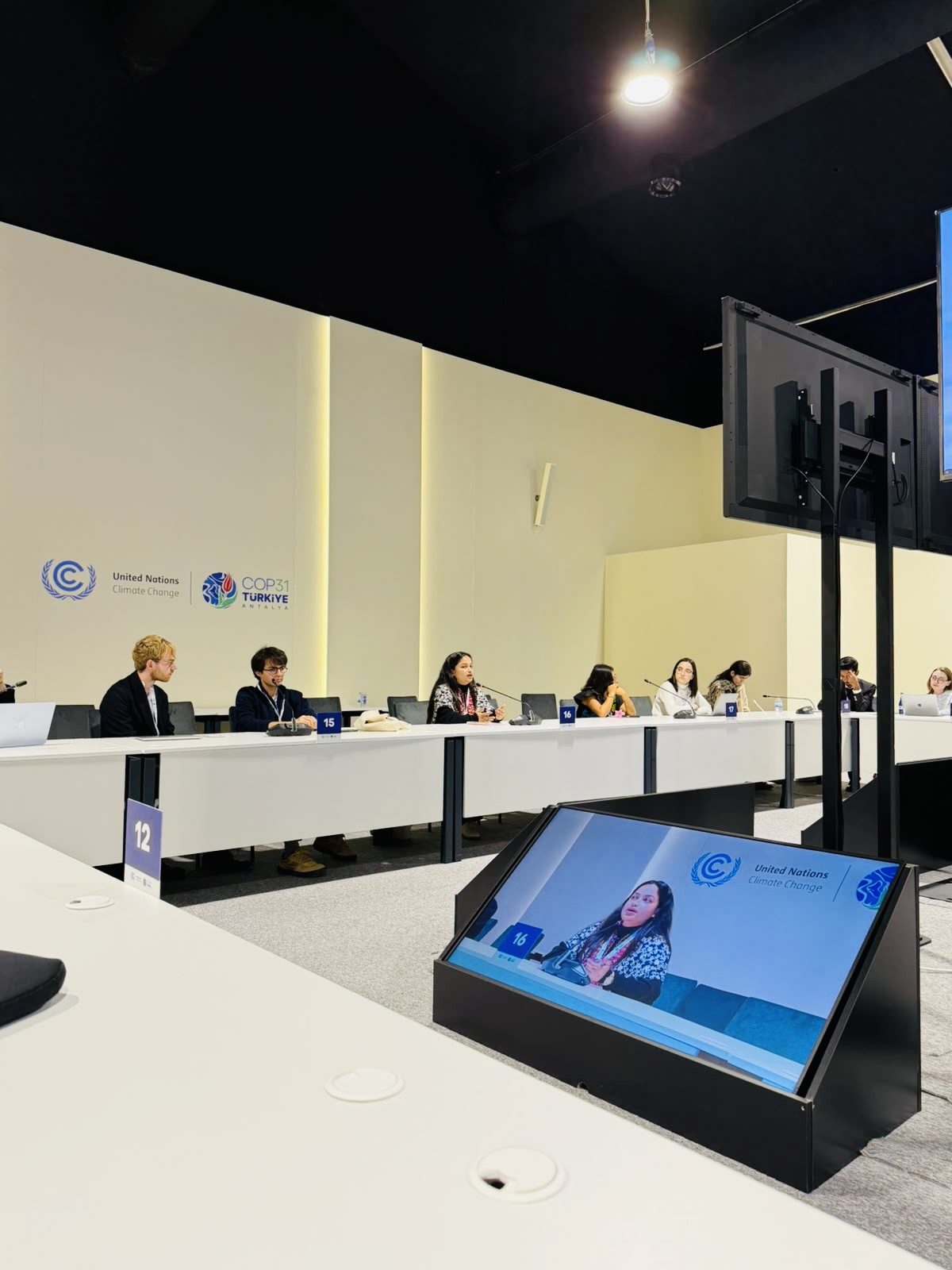
Amanna Jahan Biva, Research Associate at SHISUK, participated in the Global Youth Statement – Youth NGO Roundtable Consultation during the 31st UN Climate Change Conference (COP31) in Antalya, Türkiye. Representing the Regional Conference of Youth Asia-Pacific (RCOY APAC) 2026, Biva contributed to formal discussions examining how regional youth priorities can be effectively integrated into global climate governance.
Convened within a United Nations Framework Convention on Climate Change (UNFCCC) conference setting alongside the YOUNGO Global Youth Statement 2026, the roundtable brought together youth representatives and delegates to align regional advocacy with international negotiation processes.
Bridging Regional Priorities and Global Climate Processes
International climate negotiations increasingly rely on structured youth constituencies to channel grassroots and regional realities into policy dialogues. Ahead of global climate summits, regional gatherings such as RCOY APAC consolidate the lived experiences, policy recommendations, and climate priorities of young people across diverse national contexts.
Participating on behalf of RCOY APAC 2026, Biva underscored the importance of ensuring that regional consultations translate into substantive influence within global decision-making arenas. Her intervention focused on strengthening meaningful youth participation in UNFCCC processes so that young practitioners and advocates are engaged as active contributors rather than symbolic observers.
Advancing Youth Advocacy Across Diverse Platforms
During the roundtable session, Biva highlighted how young people across the Asia-Pacific region are carrying forward shared climate priorities through coordinated, multi-platform advocacy. Rather than relying on isolated interventions, youth networks are combining formal policy submissions with sustained public engagement.
She noted that consultations, press conferences, peer networking, and direct engagement with institutional stakeholders work together to amplify both the Regional Youth Statement and the Global Youth Statement 2026. Through these complementary channels, young leaders are bringing the voices, priorities, and demands of communities in the Asia-Pacific region directly into international climate discussions.
Connecting Youth Mobilisation to Institutional Practice
For SHISUK, engagement in international youth and climate policy forums complements its long-standing commitment to community-led development, climate resilience, and youth mobilisation in Bangladesh. Supporting young researchers and practitioners to participate in global consultations strengthens the two-way exchange between local realities and international policy frameworks.
As global climate deliberations continue, SHISUK remains committed to fostering youth leadership and ensuring that the perspectives of climate-affected communities and young advocates inform equitable, accountable climate action at both national and international levels.