Daudkandi, September 11, 2024
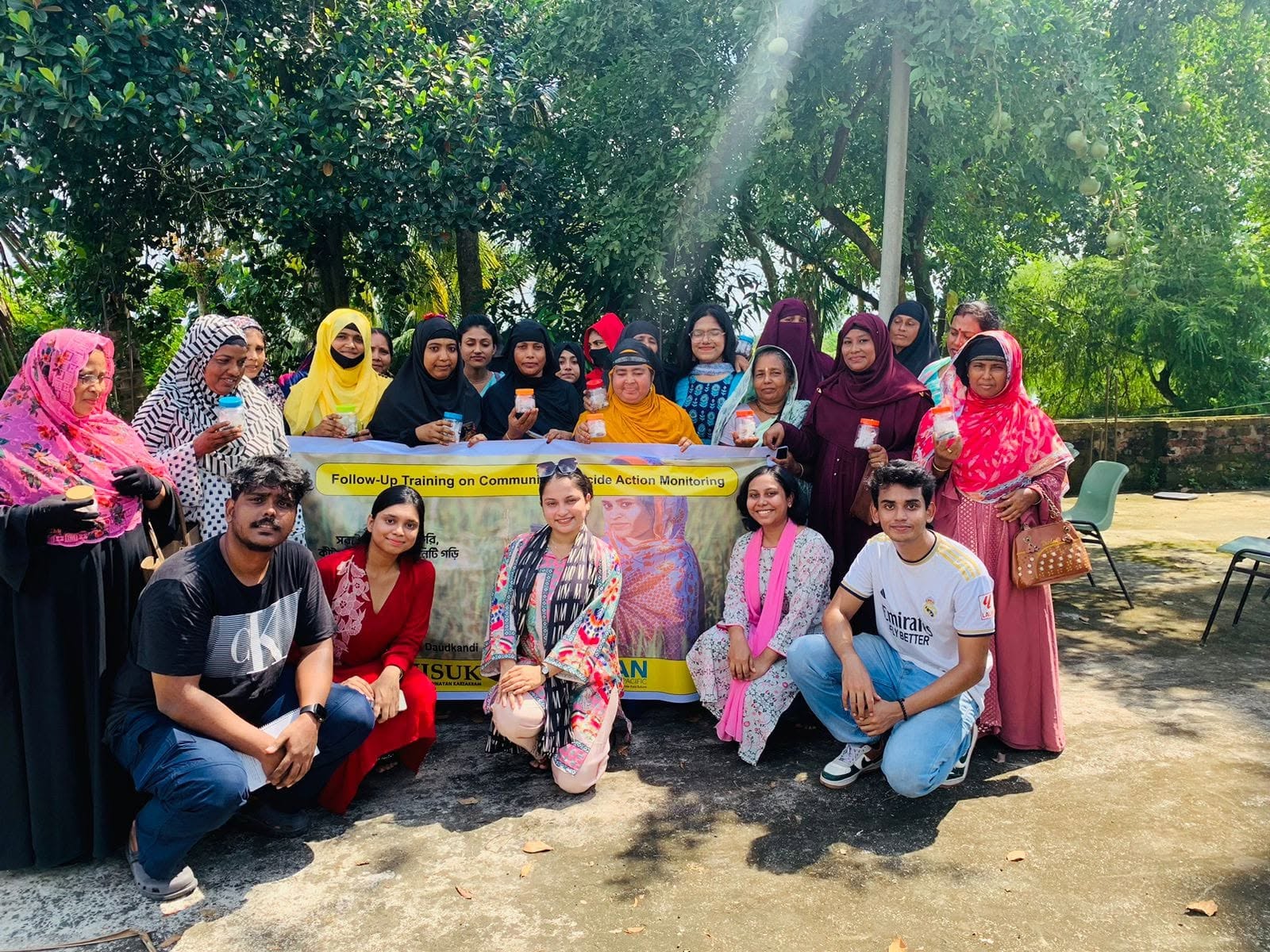
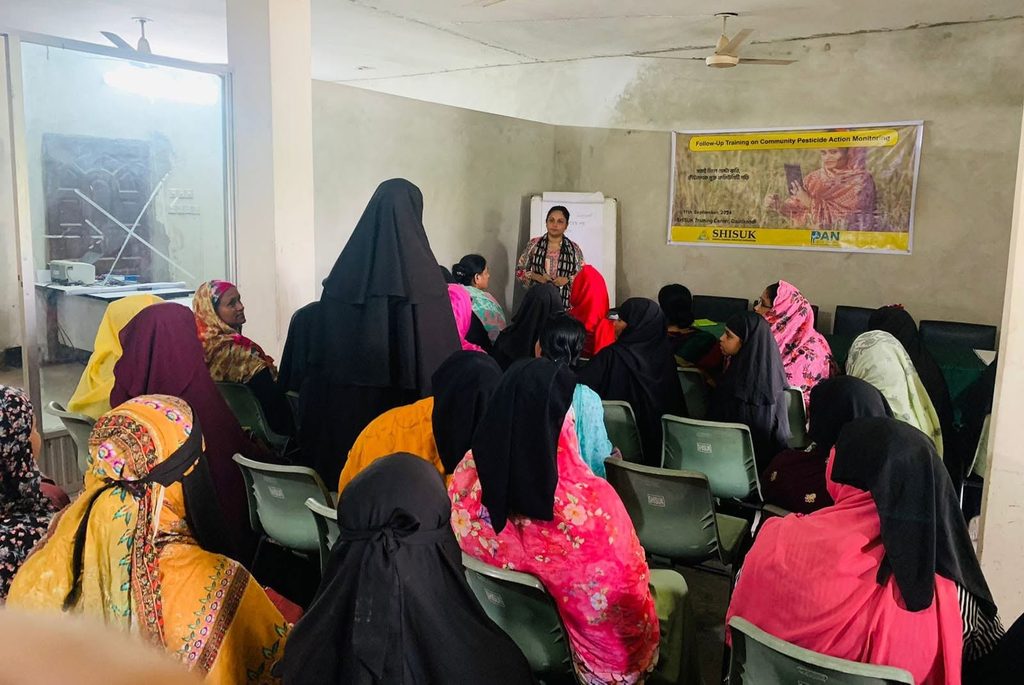
Shikkha Shastha Unnayan Karzakram (SHISUK) organized a strategic follow-up training on Community Pesticide Action Monitoring (CPAM) at its Regional Office in Elliotganj. The session convened 35 grassroots women leaders representing 20 villages—including Bashora, Kolakopa, Daulatpur, and Billalpar—to reinforce community-led agrochemical monitoring mechanisms and scale up sustainable agricultural practices.
Building Climate Resilience Through Agroecology
Facilitated by SHISUK representative Amanna Jahan Biva, the interactive session provided a platform for participants to reflect on the ongoing impacts of SHISUK’s grassroots interventions. Discussions centered on the practical application of previous capacity-building initiatives, which covered organic pesticide preparation, indigenous seed preservation, and homestead agro-gardening.
Addressing recent climatic disruptions, participants evaluated the localized impacts of severe rainfall and flooding on their agricultural livelihoods. Despite these infrastructural and ecological setbacks, the women demonstrated remarkable resilience, expressing a unified determination to rehabilitate their garden beds and sustain the agroecological methods crucial for both household food security and environmental health.
Harnessing Digital Tools for Grassroots Monitoring
A central focus of the training’s second half was the integration of smart communication technologies to strengthen decentralized monitoring networks. To bridge the communication gap between field-level activities and institutional support, SHISUK initiated the creation of a dedicated community digital network via WhatsApp.
Supported by two youth volunteers, all 35 participants were successfully onboarded onto the platform. The women received hands-on technical guidance on how to document their homestead gardening progress, report localized agricultural or pesticide-related issues, and share visual evidence (photos and videos) of their field interventions. This digital transition is designed to enable real-time CPAM monitoring, facilitate peer-to-peer knowledge sharing, and ensure continuous connectivity with SHISUK’s technical team.
Fostering Decentralized Community Leadership
To ensure the long-term sustainability of the CPAM initiative, specific leadership responsibilities were distributed among the women representatives from each participating community. This decentralized structural approach aims to foster continuous engagement, shared accountability, and localized advocacy for safe, chemical-free farming practices.
The convening concluded with a shared commitment to collective action. As these empowered women return to their respective villages, they carry forward the mandate to lead positive environmental changes, proving once again that grassroots women’s leadership is indispensable to the agroecology movement in Bangladesh.