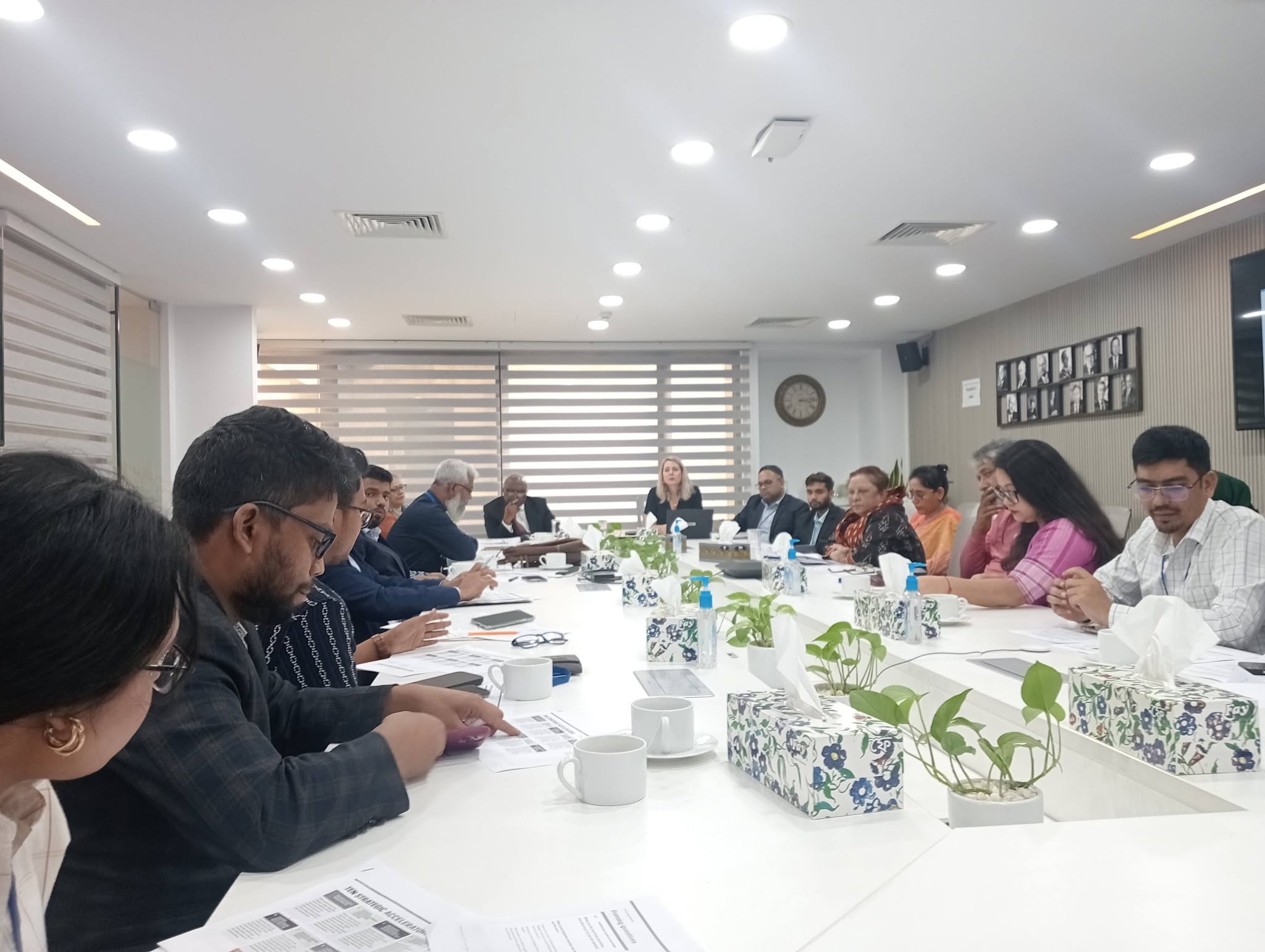
At UN House in Dhaka, human rights defenders, youth leaders, farmers’ representatives, and Indigenous advocates urged the United Nations to anchor its next five-year cooperation framework in accountable governance, rural livelihoods, and measurable equity.
DHAKA, 26 November 2026 — Civil society representatives from across Bangladesh gathered at UN House in Dhaka on 24 November 2026 for a stakeholder consultation hosted by the United Nations in Bangladesh to inform the formulation of the United Nations Sustainable Development Cooperation Framework (UNSDCF) 2028–2032. Held from 2:00 PM to 4:00 PM ahead of formal prioritization talks with the government, the consultation examined whether the UN’s preliminary analysis reflects the lived realities of marginalized communities, young people, women, peasants, and Indigenous peoples.
The UNSDCF is the core strategic agreement guiding UN development agencies’ collective programming in Bangladesh over a five-year cycle. Distinct from the UN Country Analysis—a diagnostic evidence base compiled from 25 thematic inputs, horizon scanning, and UN Country Team validation—the Cooperation Framework will ultimately be signed with the Government of Bangladesh to define shared development priorities for 2028–2032. Addressing participants on 24 November, the UN facilitator emphasized that the ten strategic accelerators emerging from the 2026 Country Analysis serve as a “menu of options” rather than finalized commitments, making early civil society input essential before negotiations with the state begin.
Bangladesh in 2026: Converging Pressures and Uneven SDG Progress
Presentation materials from the UN Bangladesh Country Analysis 2026 outline a development landscape shaped by simultaneous political, macroeconomic, and ecological pressures. Following the 12 February 2026 national election—which brought a Bangladesh Nationalist Party (BNP) government into office with a large majority—the analysis notes that the next 12 to 18 months will test reform credibility.
Economic indicators point to acute fiscal constraints. According to the UN presentation, non-performing loans have exceeded 30 percent—a 25-year high—while GDP growth slowed from 7.1 percent in FY22 to 4.1 percent in FY26, with IMF forecasts projecting a further drop to 3.0 percent by FY28. A 6.8 percent tax-to-GDP ratio leaves debt interest consuming roughly 17 percent of the national budget, alongside inflation near 9 to 10 percent and approximately two million new labour-market entrants every year. Poverty has risen since 2022, adding an estimated 1.4 million people to poverty, while climate hazards cause roughly USD 3 billion in annual losses and threaten to displace over 13 million people by 2050. Geopolitical pressures—including the December 2026 expiration of the Ganges water-sharing treaty and roughly 1.2 million Rohingya refugees with no return in sight—further narrow policy space.
Progress toward the Sustainable Development Goals (SDGs) remains sharply uneven. While 61 percent of indicators with available data are moving in the right direction—led by SDG 7 (clean energy) at 83 percent and SDG 6 (clean water and sanitation) at 64 percent—23 percent are regressing and 16 percent are stagnant. Inequality under SDG 10 is deepening, with 43 percent of its indicators regressing as the Gini coefficient climbed from 32.4 to 33.4, while SDG 5 (gender equality) registers zero progressing indicators alongside a 79 percent data gap.
The Country Analysis traces exclusion to five recurring weaknesses: lack of legal identity and documentation, contracting or misaligned social protection, elite capture of common resources, informal work paired with gendered labour shocks, and data invisibility—concentrated across coastal, haor, and Chittagong Hill Tracts (CHT) districts, Dhaka’s industrial periphery, Cox’s Bazar, and Bhasan Char.
Civil Society Perspectives: Rights, Livelihoods, and Structural Gaps
Responding to the UN’s Ten Strategic Accelerators—covering inclusive economic transformation, gender norms, interoperable data, digital governance and responsible AI, skills alignment, shock-responsive social protection, social services, climate-resilient livelihoods, participatory governance, and independent justice—participants identified critical gaps between high-level frameworks and ground-level realities.
Human Rights, Civic Space, and Democratic Accountability
Several speakers stressed that democratic accountability requires far more than a single election day. A representative of the Human Rights Support Society (HRSS) warned that organizations working on civil and political rights still face administrative restrictions under the NGO Affairs Bureau—citing nearly a year-long registration delay—and raised concerns that loopholes in draft cyber security legislation could allow authorities to cancel NGO registrations for criticizing the government. He also flagged widespread online gender-based violence directed across political lines at young women who entered politics after the July movement, warning that digital abuse threatens women’s future political representation. Writing after the meeting, HRSS’s Ijajul Islam, who attended as part of a two-member delegation, reiterated that sustainable development is unattainable without safeguarding human rights, democratic governance, civil and political freedoms, youth-led human rights groups, and minority protections.
Other rights advocates urged the UN to address persistent violations documented against journalists, rights defenders, women, and children during the political transition. Participants called for judicial independence, legal and constitutional reforms, dedicated courts with trained judges for women and children’s tribunals, digitalized justice delivery, and a genuinely functional National Human Rights Commission. Saidur Rahman, representing MSF, urged direct capacity-building for locally rooted individual human rights defenders—including lawyers and journalists—while another speaker noted that women family members of victims of state violence remain systematically absent from national vulnerability dialogues.
Youth Participation, Future Skills, and Economic Inclusion
Youth delegates challenged the gap between public rhetoric on Bangladesh’s demographic dividend and structural barriers excluding young people from funding and decision-making. One speaker noted that youth volunteers often deliver emergency food and water before state or international agencies arrive, yet remain locked out of climate funds and overseas NGO grants. Without direct, micro-level financing and institutional partnership channels, young participants warned, invitations to consultations risk becoming “lip service”.
Tipu Sultan—General Secretary of Youth Leading Climate Action (YLCA) and Senior Program Officer at SHISUK—prioritized climate-resilient agroecology across Bangladesh’s floodplains, which cover one-third of the country. Highlighting a growing gap between national education curricula and technological shifts, he advocated embedding artificial intelligence (AI) literacy in schools and expanding green, climate-aware employment in sustainable agriculture and bio-energy. Drawing on fieldwork in the Cumilla region, he also flagged widespread barriers to menstrual hygiene products among grassroots women and urged UN support for community and youth enterprises to build financial sustainability for local social initiatives.
Other young speakers echoed concerns over AI literacy, misinformation, and image-based online abuse targeting women and girls. These priorities also resonated across the UN’s parallel Youth Consultation held earlier in the UNSDCF cycle, where Fatema Tuz Jannat Noor—nominated by the International Centre for Climate Change and Development (ICCCAD)—emphasized connecting national discussions on economic transformation, climate resilience, future skills, responsible AI, social protection, and governance with the lived realities of Jamuna riverbank and char communities in Sirajganj.
Agrarian Reform, Food Sovereignty, and Rural Livelihoods
Rural and land-rights advocates questioned whether prioritizing “higher-value sectors” under Accelerator 1 risks sidelining agriculture and informal rural livelihoods. A representative of the Association for Land Reform and Development (ALRD) noted that land conflicts drive a disproportionate share of court cases and rights violations, arguing that GDP averages obscure rural exclusion and warning that women laid off from garment factories face acute livelihood shocks.
Badrul Alam, President of the Bangladesh Krishok Federation (BKF), called for agrarian reform, distribution of khas (state-owned) land to landless families, equal rights for women farmers and agricultural workers, and protection of Indigenous peoples’ collective land rights. Urging the UN to back agroecology, food sovereignty, and farmers’ rights over seeds, he warned against growing transnational corporate control over agriculture, seeds, genetically modified organisms (GMOs), and natural resources. In both his floor intervention and a post-consultation statement, he stressed that development by 2032 must serve people, protect nature, reduce inequality, and uphold democratic participation rather than corporate profit.
Climate Justice, Pollution, and Locally Led Adaptation
Participants identified major environmental omissions in the draft accelerators, pointing to severe air pollution, chemical waste—including reports of “forever chemicals” (PFAS) contaminating coastal rainwater harvesting—childhood lead exposure, and the neglect of Bangladesh’s maritime domain. Speakers also flagged the absence of climate mitigation and energy transition in Accelerator 8, called for child-sensitive climate action, and warned that repeated coastal disasters trap families in overlapping microfinance debt while driving climate migration and urban child labour. Following disappointing climate finance outcomes at COP31, one youth advocate urged greater UN support for low-cost, locally led adaptation built on traditional practices such as floating agriculture.
Indigenous Peoples and Overlooked Communities
Multiple speakers argued that “leaving no one behind” fails when excluded identities remain unnamed. Indigenous advocates urged anchoring UNSDCF 2028–2032 in the UN Declaration on the Rights of Indigenous Peoples (UNDRIP)—marking its 20th anniversary in 2027—and enforcing Free, Prior and Informed Consent (FPIC) in development projects. Hiron Mitra Chakma of the Kapaeeng Foundation called for direct financing for Indigenous-led and traditional institutions, while other delegates proposed tripartite coalitions linking the UN, government, and Indigenous organizations, alongside primary textbook reforms to strengthen national recognition of Indigenous identities. Speakers also urged explicit inclusion of plains Indigenous groups, Dalits, tea-garden workers, northern char dwellers, transgender communities, and coastal boat-dwelling Manta fisherfolk whose lack of National ID cards bars them from social safety nets during seasonal fishing bans.
Strategic Implications for Bangladesh 2028–2032
A blunt question from the floor defined the afternoon’s closing debate: when issues such as gender inequality, weak judicial independence, and centralized governance have persisted across five decades of UN engagement, how will the 2028–2032 framework generate the political will for real change?
Responding, the UN facilitator acknowledged that most underlying challenges are recurring, though AI governance, energy, and water represent newly integrated areas. She noted that the UN is moving away from an unfocused “kitchen sink” approach toward systems-based programming that pairs the UN’s distinct normative mandate—as custodian of international human rights treaties—with specialized global expertise. On Cox’s Bazar, she noted that an area-based study—alongside analyses on the CHT and Sundarbans—seeks to address the protracted Rohingya situation through a constructive humanitarian-development nexus.
For UNSDCF 2028–2032 to translate consultation into impact, five strategic shifts will be critical:
- Operationalizing Leave No One Behind: Dismantling legal-identity gaps, elite capture, and data invisibility for explicitly recognized groups—from Manta fisherfolk and char residents to Indigenous peoples and transgender citizens.
- Linking LDC graduation with social justice: Ensuring economic diversification strengthens rather than displaces agroecological livelihoods, informal workers, and former garment workers.
- Decentralizing governance and climate resources: Shifting authority, predictable finance, and technical capacity from Dhaka to local governments and community-led adaptation initiatives.
- Resourcing youth and grassroots partners: Removing administrative and financing bottlenecks so youth-led and community organizations participate as funded co-designers rather than unpaid volunteers.
- Protecting civic space and rule of law: Leveraging UN normative mechanisms to advance judicial independence, rights-respecting cyber governance, and a functional National Human Rights Commission.
Institutional Relevance for SHISUK
The priorities debated at UN House align closely with SHISUK’s core work in youth engagement and mobilization, climate change, agroecology, and community enterprise. Field experience across Bangladesh’s floodplains underscores a central theme voiced throughout the consultation: externally designed initiatives rarely endure without local ownership. Combining agroecological resilience with viable youth and community enterprises—as highlighted in Tipu Sultan’s intervention—offers a practical pathway for connecting national frameworks like the UNSDCF with lasting community-level resilience.
Turning Dialogue into Measurable Commitments by 2032
The 24 November dialogue forms part of an ongoing consultation series extending to organizations of persons with disabilities, the private sector, and regional stakeholders in Cox’s Bazar, Chattogram, and Sylhet. Whether UNSDCF 2028–2032 delivers meaningful transformation will depend on what happens after the consultation rooms empty. Navigating Bangladesh’s fiscal strains, ecological risks, and governance transition by 2032 will require converting civil society’s candid recommendations into accountable institutional commitments, decentralized financing, and inclusive partnerships that genuinely leave no one behind.