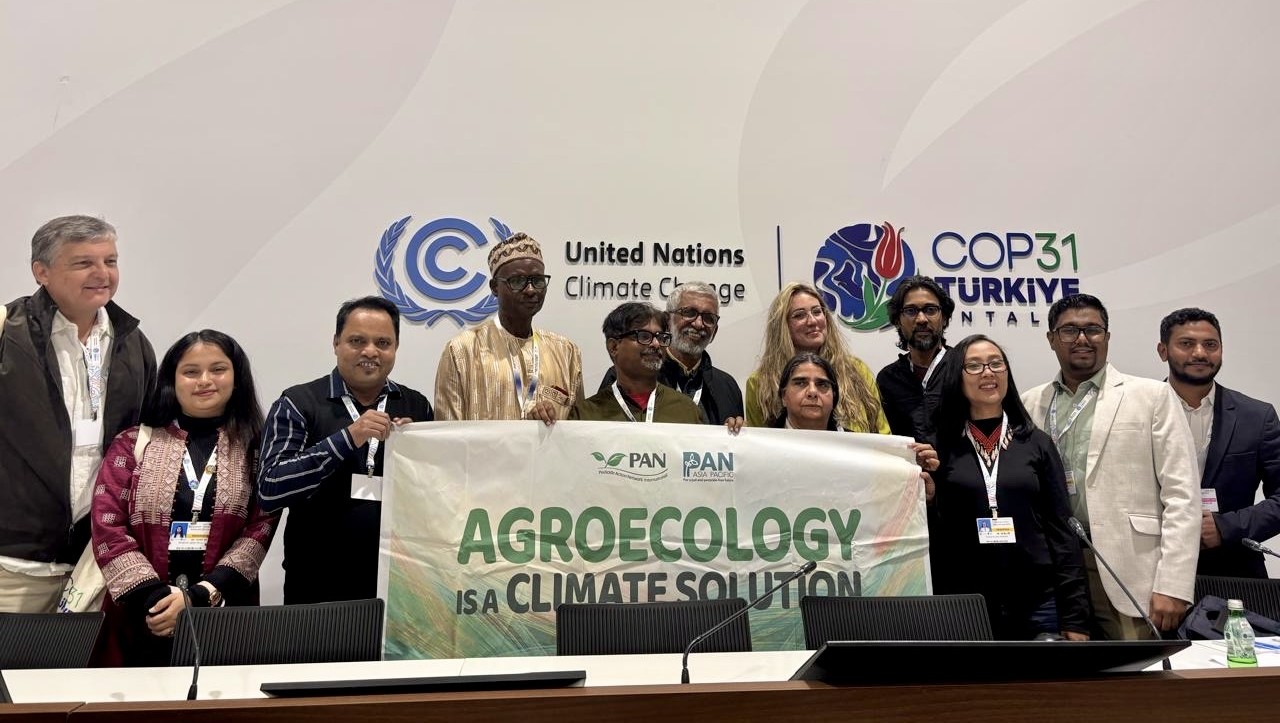
SHISUK Joins PAN International in Calling for Agroecology and Climate Accountability After COP31 and GFC IC1 Deadlocks
Following the collapse of overarching negotiations at the 31st UN Climate Change Conference (COP31) in Antalya, Türkiye, and a constrained conclusion to the First International Conference of the Global Framework on Chemicals (GFC IC1) in Geneva, Switzerland, SHISUK has joined Pesticide Action Network (PAN) International in warning that entrenched fossil fuel and agrochemical commercial interests are stalling multilateral action.
In a joint press statement issued by PAN International—a global coalition of more than 600 non-governmental organisations, institutions, and individuals across 90 countries—advocates identified a shared pattern of obstruction across both summits. COP31 ended on 22 November 2026 without an overarching cover decision, marking the first UN climate summit to close without a deal since 2009, while GFC IC1 concluded on 20 November 2026 after five days of review negotiations.
Two Summits, Shared Commercial Pressures
According to the PAN International statement, deadlocks across climate, plastics, and synthetic chemical negotiations are closely linked rather than isolated policy failures. Because synthetic chemicals, plastics, and pesticides are overwhelmingly derived from fossil fuels, major oil companies and fossil-fuel-exporting states increasingly treat petrochemicals as a primary growth sector as transport and power generation decarbonise.
At COP31, two weeks of talks failed to produce an agreed cover decision after allied fossil fuel exporters blocked references to transitioning away from oil, gas, and coal. At the same time, some developed countries resisted efforts to clarify public climate finance obligations under Article 9.1 of the Paris Agreement, while urging developing nations to accelerate their own energy transitions. The United States, having withdrawn from the Paris Agreement and sent no official delegation to Antalya, left a significant void in public climate finance while continuing to expand fossil fuel production.
A similar dynamic unfolded in Geneva at GFC IC1, the first review conference of the voluntary Global Framework on Chemicals adopted in Bonn in 2023. Agrochemical industry representatives and aligned delegations worked to resist binding progress on Highly Hazardous Pesticides (HHPs), clashing with African nations, PAN, and civil society groups over meaningful indicators to measure toxic pesticide harm.
Mounting Gaps in Climate and Chemicals Finance
The statement also highlighted severe funding shortfalls across both international frameworks, leaving developing nations and affected communities to absorb the health, environmental, and economic costs:
- Climate Finance: Developing countries require hundreds of billions of dollars annually to adapt to climate impacts, with global climate finance needs estimated at upwards of US$1.3 trillion per year. Yet the refusal of major historical emitters to meet public finance commitments contributed directly to the COP31 impasse, jeopardising resilience, rural livelihoods, and disaster response.
- Chemicals Finance: The Global Framework on Chemicals faces acute underfunding. Across its first two funding rounds, the GFC Fund committed US$8.2 million across 23 countries, while the GFC Secretariat operated on US$5.4 million in voluntary contributions between 2023 and 2026.
Connecting Climate Justice to Food Systems and Agroecology
Representing grassroots development and agricultural perspectives from Bangladesh, Raisul Safkat, Senior Researcher at SHISUK and one of the UNFCCC COP31 media contacts for the release, emphasised that climate negotiations cannot be separated from the future of farming communities.
“The fight for climate justice is a fight for our food systems,” Safkat said. “The same corporate interests blocking climate action are locking farmers into chemical dependency and destroying biodiversity, soils and food sovereignty. We cannot build climate resilience on a collapsing ecological foundation. Agroecology and community-led food systems are not optional: they are the path to a just transition.”
For agricultural nations such as Bangladesh, where smallholder farmers face both escalating climate hazards and the ecological costs of chemical-intensive farming, shifting toward agroecological practices is central to protecting soil health, biodiversity, and rural livelihoods.
Protecting Progress on Highly Hazardous Pesticides
Despite strong industry pushback in Geneva, PAN and allied delegations secured notable steps to defend pesticide governance. Many governments and stakeholders reaffirmed plans to phase out Highly Hazardous Pesticides by 2035, and key health and exposure indicators proposed by 54 African nations remained on the table for further negotiation.
In addition, the Global Alliance on HHPs was safeguarded for another three years despite sustained opposition from industry lobbyists and the United States. Early GFC Fund grants awarded to PAN in West and East African countries have also begun supporting regulatory reforms on hazardous pesticides and the adoption of safer agricultural alternatives.
Sustaining Multilateral Momentum Toward 2027
Despite the setbacks in Antalya and Geneva, civil society networks reaffirmed their commitment to accountable multilateralism.
“From the negotiating halls of Antalya to the committee rooms of Geneva, the world is watching a handful of petro-states and corporate lobbyists hold human survival hostage,” said Manon Rouby, Co-coordinator of PAN International. “PAN continues to stand on the side of multilateralism. The fight for real action to protect people and the planet will continue in Addis Ababa in 2027.”
Through its continued research, policy advocacy, and community-based initiatives in Bangladesh, SHISUK remains committed to advancing agroecology, food sovereignty, and climate justice—working alongside regional and global coalitions to ensure that smallholder farmers and climate-vulnerable communities are at the centre of equitable environmental governance.
For more details: https://pan-international.org/release/oil-states-are-holding-the-planet-hostage-time-for-them-to-get-out-of-the-way/