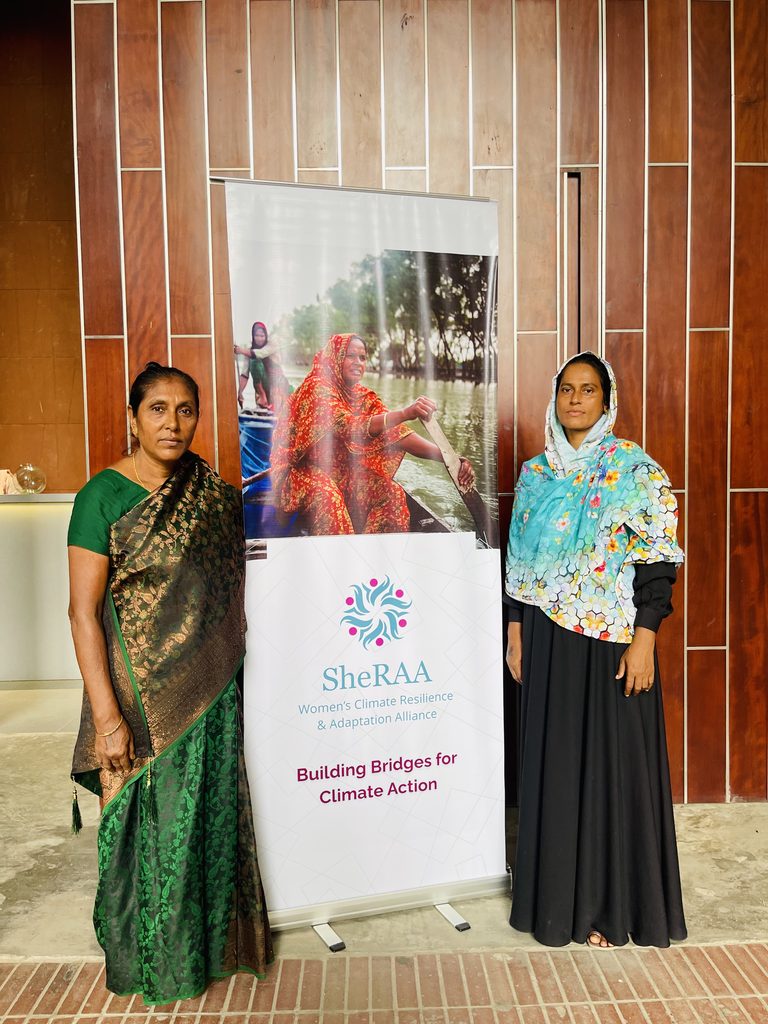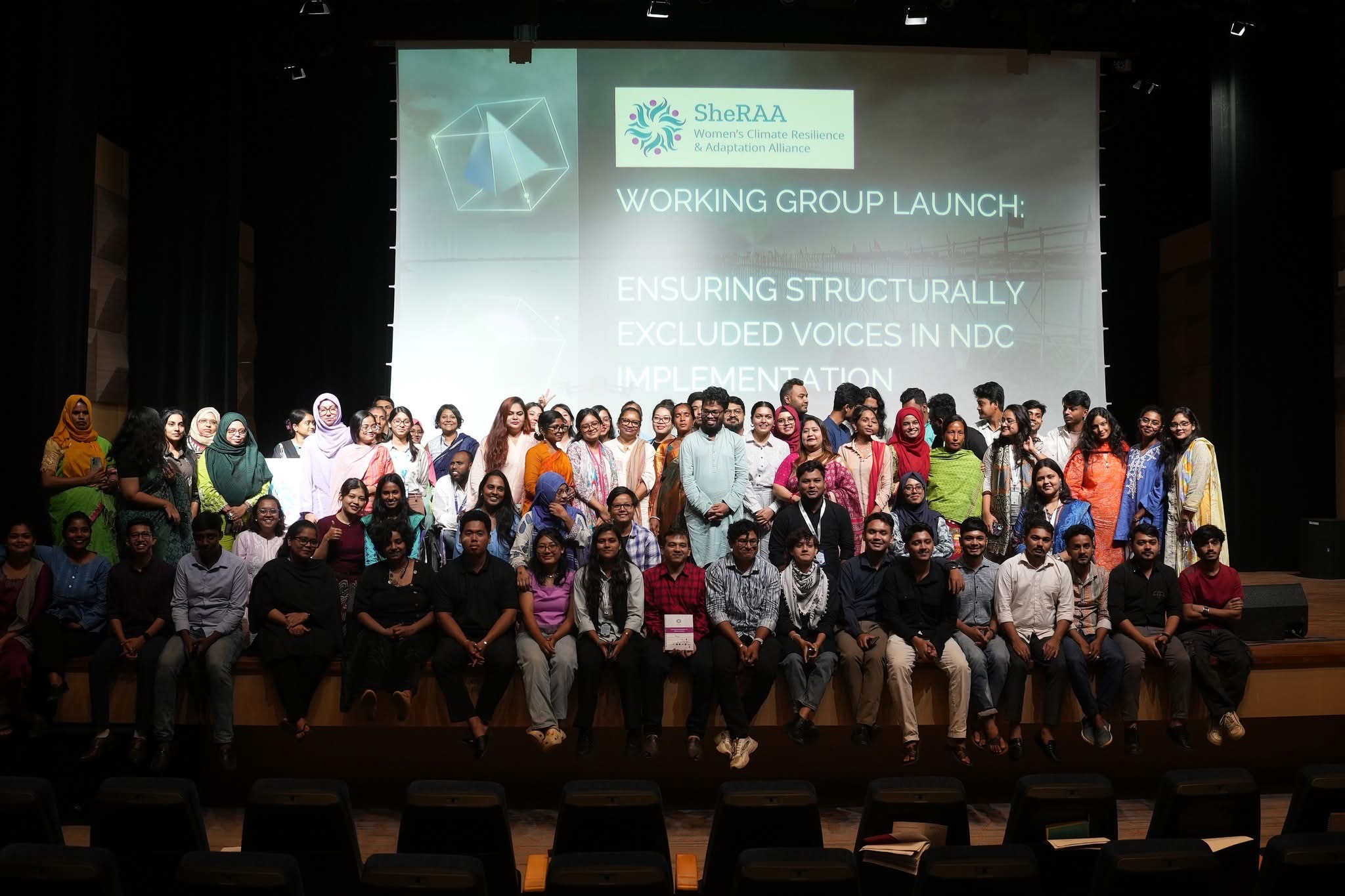
At BRAC University on September 22, 2025, grassroots community organizers, indigenous advocates, and climate policy practitioners gathered for the SheRAA Convening 2025: Powering Partnerships for Climate Justice. Organized by Bonhishikha with support from the Centre for Climate Change and Environmental Research (C3ER) at BRAC University and the Embassy of the Kingdom of the Netherlands in Bangladesh, the summit brought together women’s rights organizations, youth networks, and civil society actors to bridge the gap between frontline adaptation and national policy frameworks.
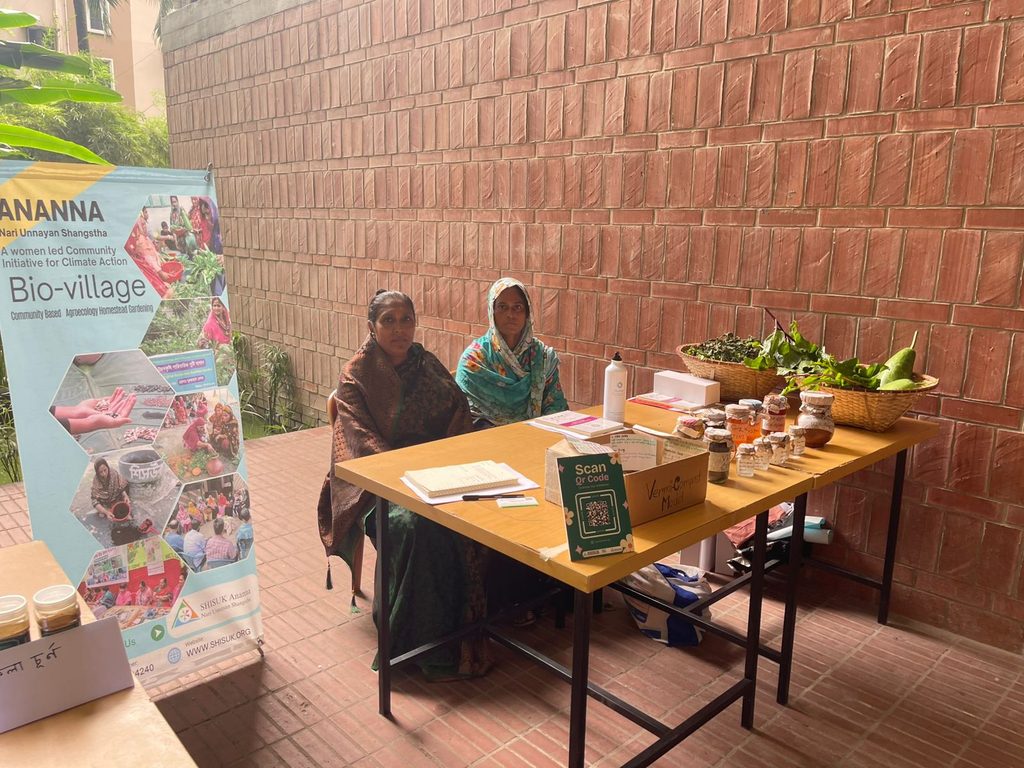
Representing grassroots development and community enterprise, SHISUK – Anonna Nari Unnayan Sangstha joined the convening to strengthen solidarity across feminist and youth-led climate initiatives. Combining high-level technical strategy with the warmth of shared purpose, the day provided an open forum to celebrate partner milestones, launch thematic working groups, and build cross-sectoral coalitions for inclusive climate action.
Amplifying Indigenous Voices from the Hill Tracts
The emotional and moral anchor of the convening came from the lived experiences of frontline communities. Pimram Mro, an Indigenous woman from Lama, Bandarban, addressed delegates in her native Mro language, detailing the compounding crises of accelerating climate extremes, environmental degradation, and long-standing structural exclusion.
Her testimony highlighted how top-down climate initiatives often fail to account for the unique vulnerabilities and customary knowledge systems of remote ethnic communities. In direct response to these systemic gaps, the convening formally inaugurated a dedicated Working Group on Ensuring Structurally Excluded Voices in NDC Implementation, established to systematically embed marginalized perspectives into national climate planning.
From Policy to Budgets: Deconstructing Bangladesh’s NDC 3.0
The convening’s core technical session, “Bangladesh NDC 3.0: Identifying Opportunities for Climate Justice and Inclusion,” was moderated by Bareesh Hasan Choudhury of the Bangladesh Environmental Lawyers Association (BELA). Panelists evaluated how Bangladesh’s upcoming Nationally Determined Contributions (NDC 3.0) framework under the Paris Agreement can transition from aspirational language into concrete rights-based commitments.
Discussions focused on integrating essential cross-cutting dimensions into climate planning:
- Gender Equality & Intersectional Inclusion: Centering women, persons with disabilities, and historically marginalized groups in adaptation governance.
- Youth Leadership: Ensuring young researchers, activists, and rural youth hold formal decision-making seats in climate monitoring.
- Essential Human Services: Aligning climate policies with investments in Water, Sanitation, and Hygiene (WASH), public health, nutrition, and resilient education infrastructure.
- Just Transition: Protecting smallholder farmers, informal laborers, and vulnerable resource-dependent workers as economic sectors adapt to ecological disruptions.
Panelists were clear: inclusive frameworks remain performative unless backed by dedicated domestic and international climate finance, transparent budget lines, and community-led project implementation.
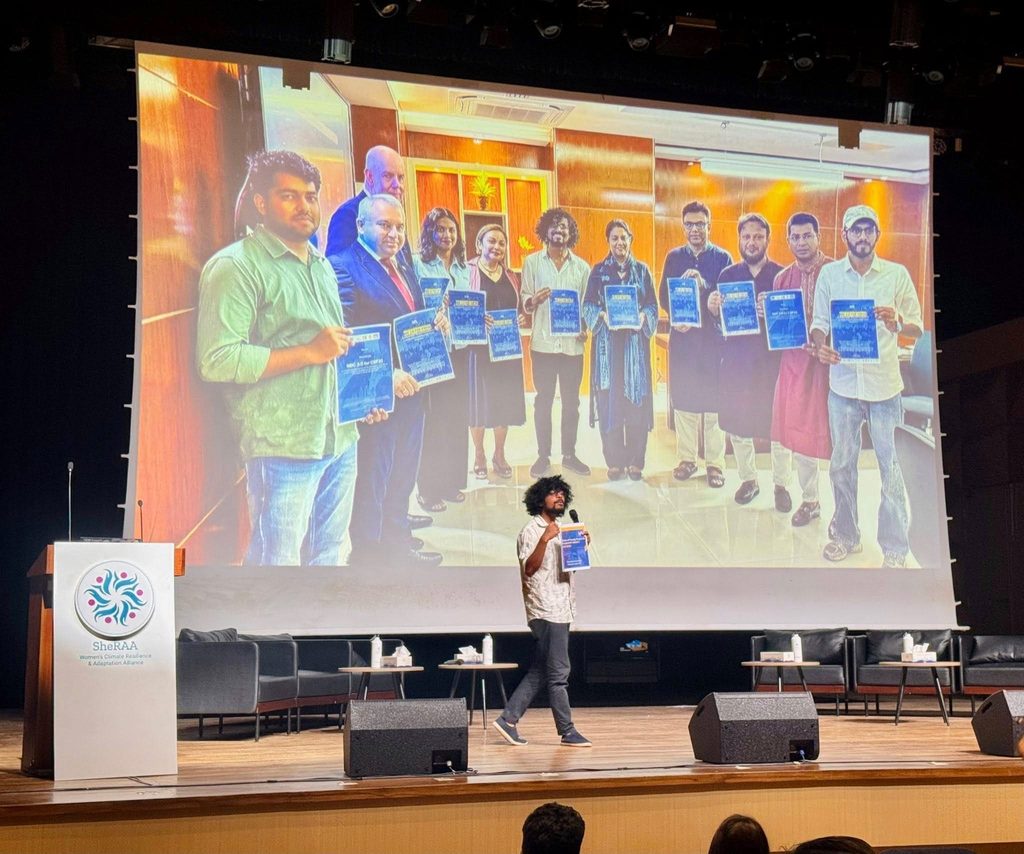
Institutionalizing Feminist and Youth Leadership
The convening reaffirmed that climate justice is fundamentally inseparable from gender justice. For SHISUK and its allied networks, building genuine climate resilience requires investing directly in the agency, land rights, and leadership of women and young people who manage local ecosystems daily. By bringing frontline realities from Bandarban to national policy dialogues in Dhaka, the SheRAA Convening established an actionable blueprint for an equitable, community-driven climate future.