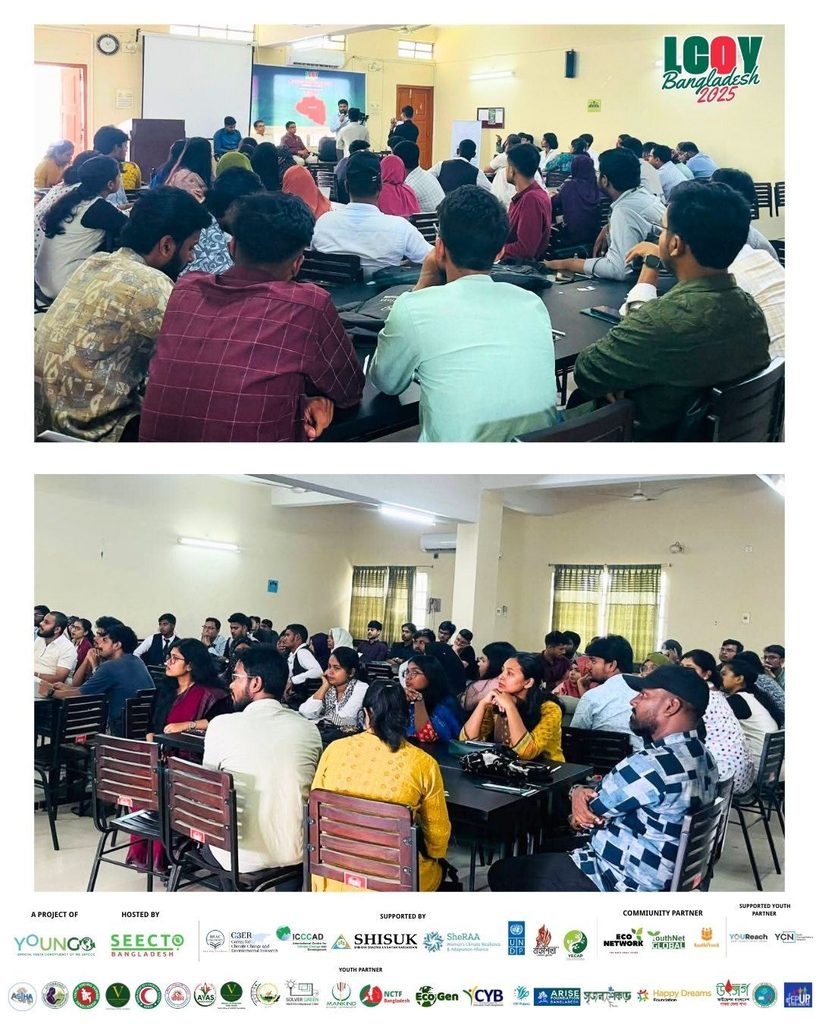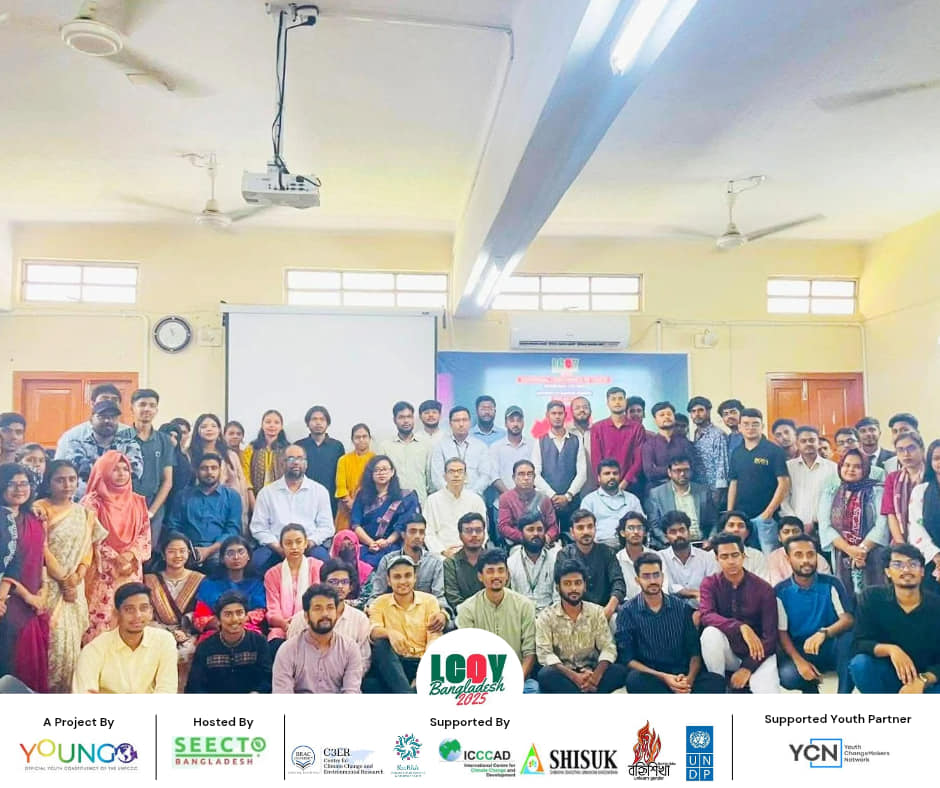
To ensure regional environmental priorities inform national climate governance, 90 young leaders gathered at the University of Rajshahi to craft actionable recommendations on renewable energy, drought resilience, and agricultural justice.
Rajshahi, September 12, 2025 — At the University of Rajshahi, 90 youth activists aged 18 to 25 convened for the Divisional Conference of Youth (Divisional COY) 2025. Organized by YOUReach – Youth in Research and Action for Social Change and the Youth ChangeMakers Network as part of the LCOY Bangladesh 2025 framework, the day-long conference provided a dedicated platform for youth from across the division to directly influence national climate policies and build a lasting regional advocacy network.
The gathering brought together an inclusive cohort of 56 male, 33 female, and one non-binary participant to address the unique ecological and climatic vulnerabilities facing the northern region of Bangladesh.
Bridging Grassroots Voices with Policy and Academia
The conference convened a diverse panel of government officials, academic experts, and development practitioners to evaluate and guide the youth participants’ proposals.
Key attendees included:
- A.T.M Golam Mahbub, Director of the Directorate of Youth Development in Rajshahi.
- Azizur Rahman, Chief Community Development Officer of Rajshahi City Corporation.
- Tipu Sultan, Senior Program Officer, SHISUK
- Ali Hossain, Youth Chief of the Red Crescent Society of Rajshahi University Unit.
- Prof. Nurul Momen, Director of the Rajshahi University Career Counseling and Development Center and Professor in the Department of Public Administration.
- Radia Awal Trisha, Assistant Professor in the Department of Anthropology at Rajshahi University.
- Prof. GM Abul Wahab, Professor in the Department of Social Work at the University of Rajshahi.
The observers commended the youth delegates for grounding their discussions in tangible, localized interventions rather than abstract theory.
Thematic Working Groups: Solutions Grounded in Local Realities
Working through intensive, structured breakout tracks, the participants tackled the multidimensional drivers of climate vulnerability across three dedicated working groups:
- Nationally Determined Contributions (NDCs) Group: Delegates emphasized accelerating the transition to clean energy through solar, wind, and hydropower, alongside promoting electric vehicles to reduce transport emissions. Their roadmap integrated decentralized urban resilience measures, including mandatory rooftop gardening, sustainable solid waste management, safe water governance, and the alignment of domestic actions with binding international climate frameworks.
- Just Transition Group: Confronting the pressures of rapid, unplanned urbanization and chronic regional water stress, this track proposed mandatory rainwater harvesting infrastructure and promoted rooftop farming to counter drought conditions. Delegates also called for fiscal disincentives, including targeted taxes on high-emission vehicles.
- Climate Governance Group: Discussions focused on structural enforcement and institutional accountability. The group demanded legislative mandates for rainwater harvesting, comprehensive state intervention to mitigate devastating river erosion, nationwide public awareness initiatives, and rigorous local implementation of existing environmental statutes.
Challenging Agricultural Corporatization and Protecting Smallholders
A defining discussion of the Rajshahi convening centered on the rural political economy and the accelerating corporatization of agriculture. Participants warned that large-scale industrial farming models are increasingly marginalizing smallholder farmers and eroding community resilience against climate shocks.
The forum issued a strong call for policy safeguards and economic incentives that protect small-scale, ecological farming. Delegates underscored that ensuring equitable access to agricultural resources and safeguarding localized, sustainable food systems are fundamental imperatives for genuine climate justice.
Turning Grassroots Recommendations into Enforced Policy
The central outcome of the conference is a comprehensive set of draft recommendations that will be integrated into the upcoming National Youth Statement for LCOY Bangladesh 2025, ensuring that Rajshahi’s regional priorities are embedded within national policy submissions.
Panelists and youth leaders alike emphasized that the true measure of success lies in local implementation. Moving forward, the newly solidified regional youth network will focus on holding municipal and national authorities accountable to environmental regulations—specifically the enforcement of solar panel installation mandates on commercial buildings and the institutionalization of rainwater harvesting systems. By pairing technical capacity building with sustained civic advocacy, the youth of Rajshahi are positioning themselves not merely as observers of climate disruption, but as active drivers of a sustainable, climate-resilient future.