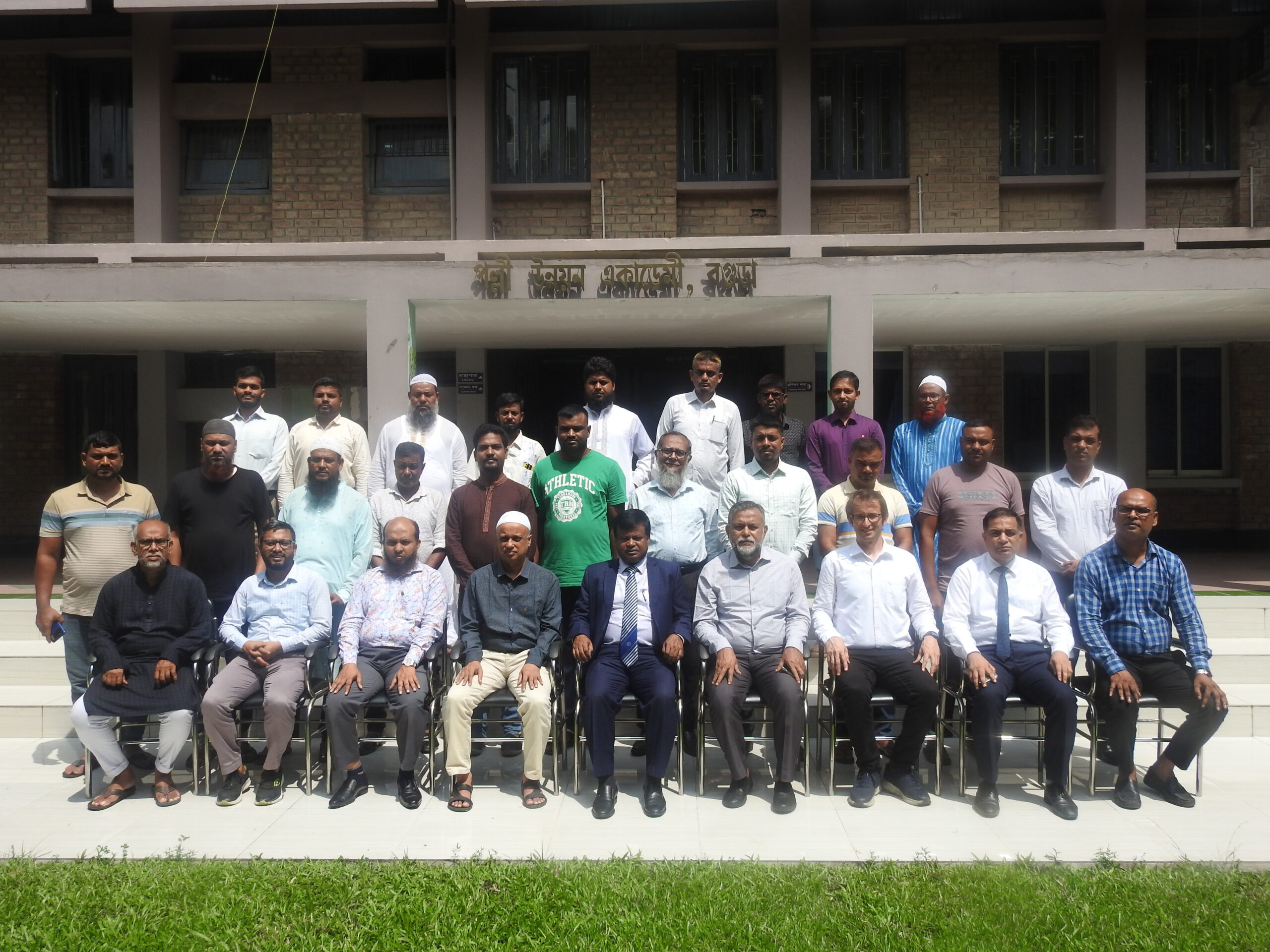
To elevate local honey production standards and promote ecological agriculture, SHISUK partnered with national and international experts to deliver a comprehensive, hands-on training program for Bangladeshi beekeepers.
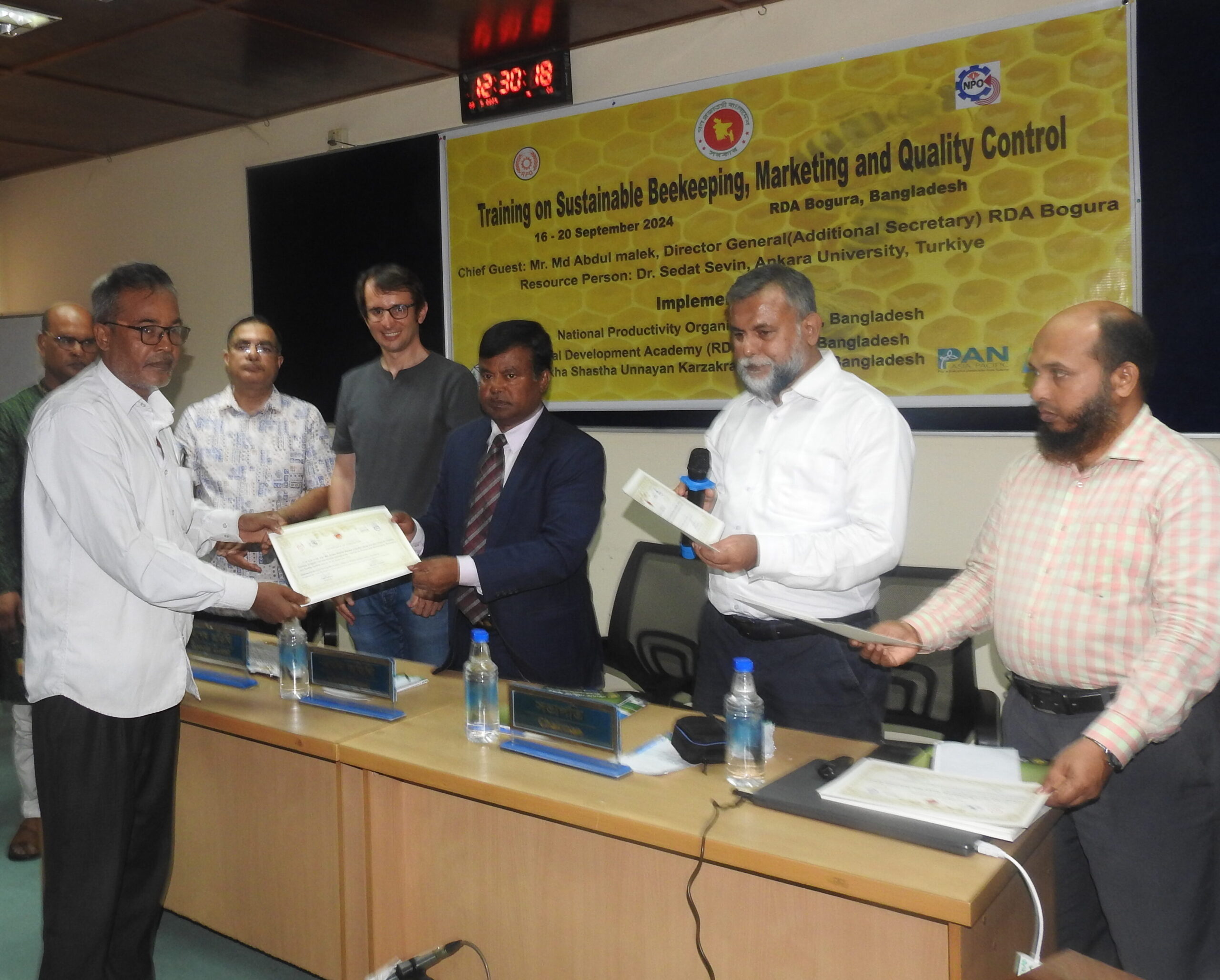
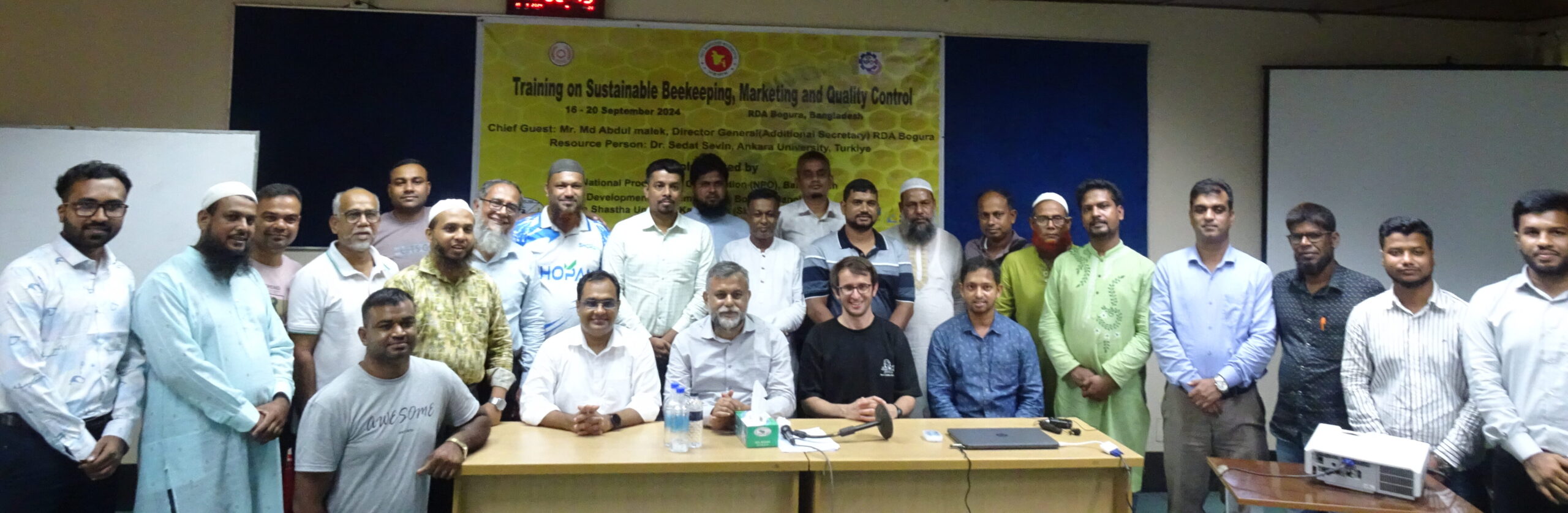
From September 16 to 20, 2024, a five-day residential training on Sustainable Beekeeping, Marketing, and Quality Control took place at the Rural Development Academy (RDA) in Bogura, Bangladesh. Implemented collaboratively by the National Productivity Organisation (NPO), RDA Bogura, and Shikkha Shastha Unnayan Karzakram (SHISUK), the initiative aimed to equip local apiarists with modern skills to enhance their practices and effectively market their products.
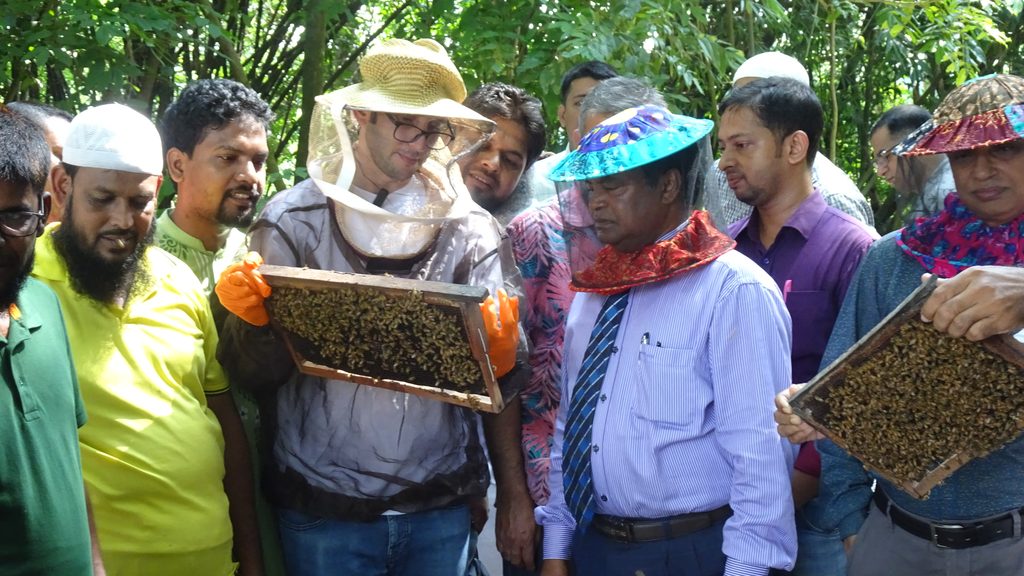
During the inaugural session, Md Abdul Malek, Director General of RDA Bogura, emphasized the vital connection between beekeeping, rural development, and environmental sustainability.
A Comprehensive, Hands-On Curriculum
The technical sessions were led by Dr. Sedat Sevin from Ankara University, Turkiye, who guided participants through the fundamentals of bee biology, hive management, and the essential role of bees in agriculture. A major focus was placed on safeguarding colonies, featuring practical demonstrations on integrated pest management strategies specifically targeting threats like Varroa mites.
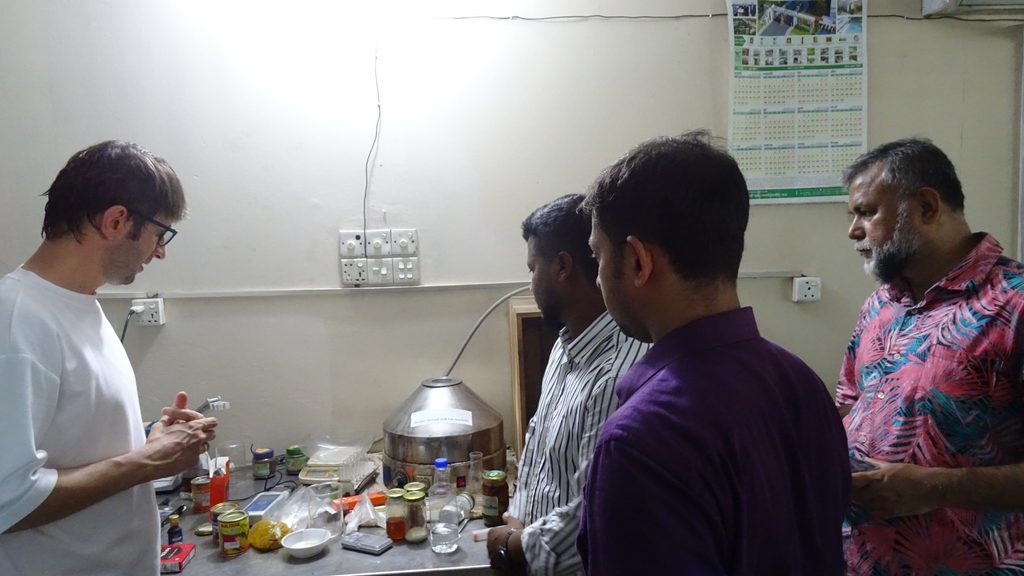
As the training progressed, the curriculum shifted to market readiness. Dr. Sevin introduced domestic and international quality control standards, guiding participants through practical exercises on testing honey for critical parameters such as moisture content and purity.
Bridging Theory and Modern Technology
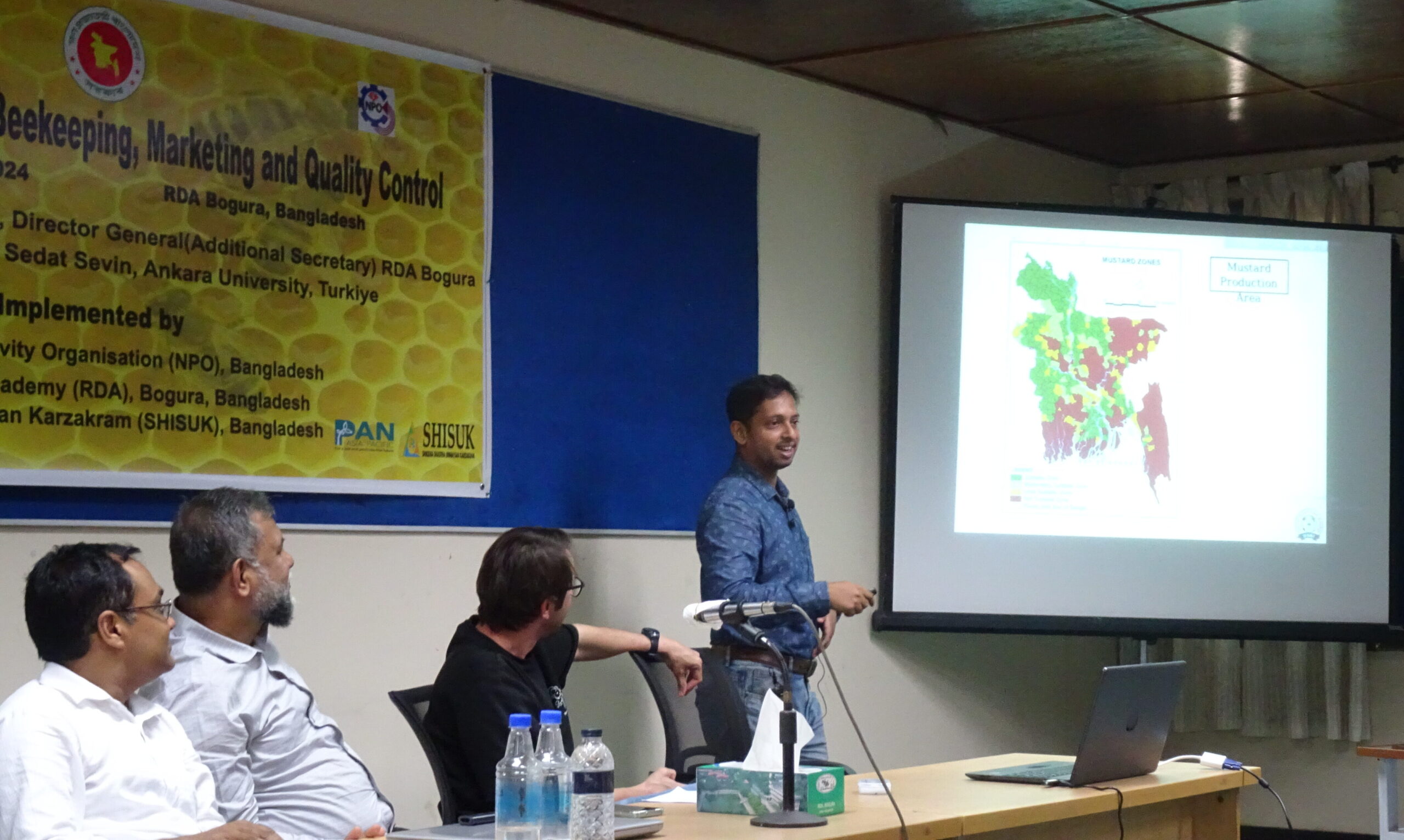
Beyond classroom lectures, the program prioritized technological exposure and practical application. Participants were introduced to automated hive monitoring systems and data analysis tools designed to provide real-time conditions and improve hive management efficiency.
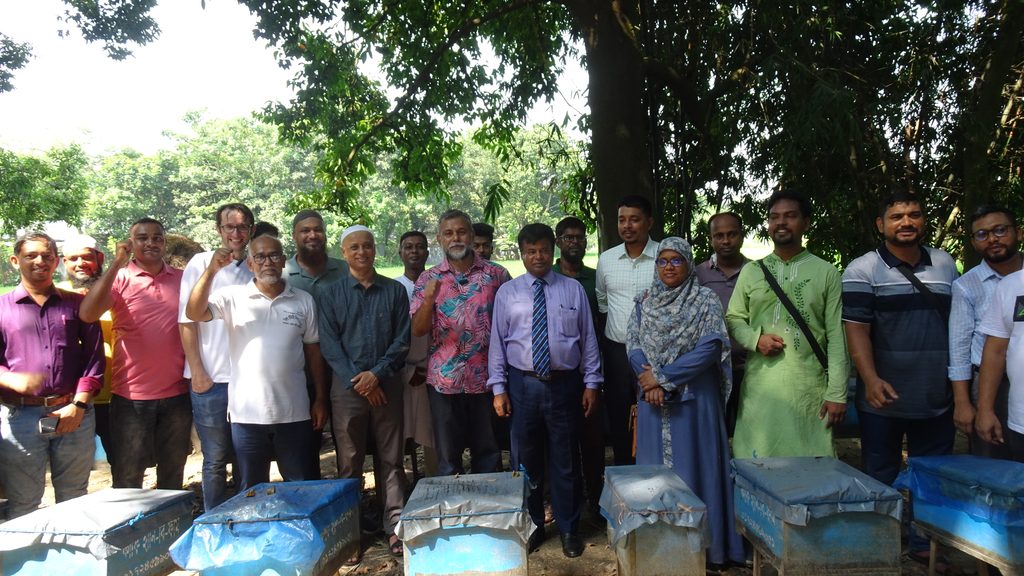
This theoretical knowledge was grounded through field visits to a local beekeeping farm and the RDA honey processing unit. During these visits, attendees observed efficient honey extraction, safe storage practices, and real-time quality control measures in action.
Strategic Recommendations from the Grassroots
The interactive nature of the workshop encouraged participants to actively share their grassroots challenges and propose systemic solutions for the industry. Key recommendations from the beekeepers included:
- Establishing a dedicated Bee Board to properly manage and oversee the beekeeping sector.
- Initiating specific programs to ensure and increase women’s participation in beekeeping.
- Securing Geographical Indication (GI) registrations for North Bangle Honey.
- Introducing advanced equipment, such as bee venom collecting machines and adulteration detection machines in honey markets.
- Diversifying apiculture revenue by selling alternative products like pollen and propolis.
- Organizing digital marketing boot camps and expanding this vital training to more rural areas.
A Step Toward Industry Transformation
The event concluded with a certificate ceremony and a collaborative networking session among the participants. Looking forward, the sector is poised for structural advancement with the upcoming opening of a new honey market featuring cold storage and dedicated research facilities. By bridging local practices with global trends, SHISUK and its partners are taking critical steps to unlock the full potential of honey production in Bangladesh.