DAUDKANDI, CUMILLA — In observance of the 16 Days of Global Action on Agroecology, Shikkha Shastha Unnayan Karzakram (SHISUK), in partnership with Pesticide Action Network Asia Pacific (PANAP), rolled out a multi-tiered campaign across Daudkandi to establish 1-kilometer pesticide-free buffer zones around primary schools. Held under the regional theme of safeguarding children and championing agroecological alternatives, the campaign combined educator training with student-led grassroots mobilization.
The regional campaign responds to widespread agrochemical contamination across rural Bangladesh, where studies indicate approximately 27% of farmers experience acute pesticide-induced health disorders and over 73% of sampled contaminated vegetables exceed maximum residue limits. Because children face heightened vulnerability to toxic drift—which severely impairs neurological, respiratory, and developmental health—the campaign positions the school campus as a sanctuary and a catalyst for farming reform.
Educators Establish the Frontline: The October 4 Orientation
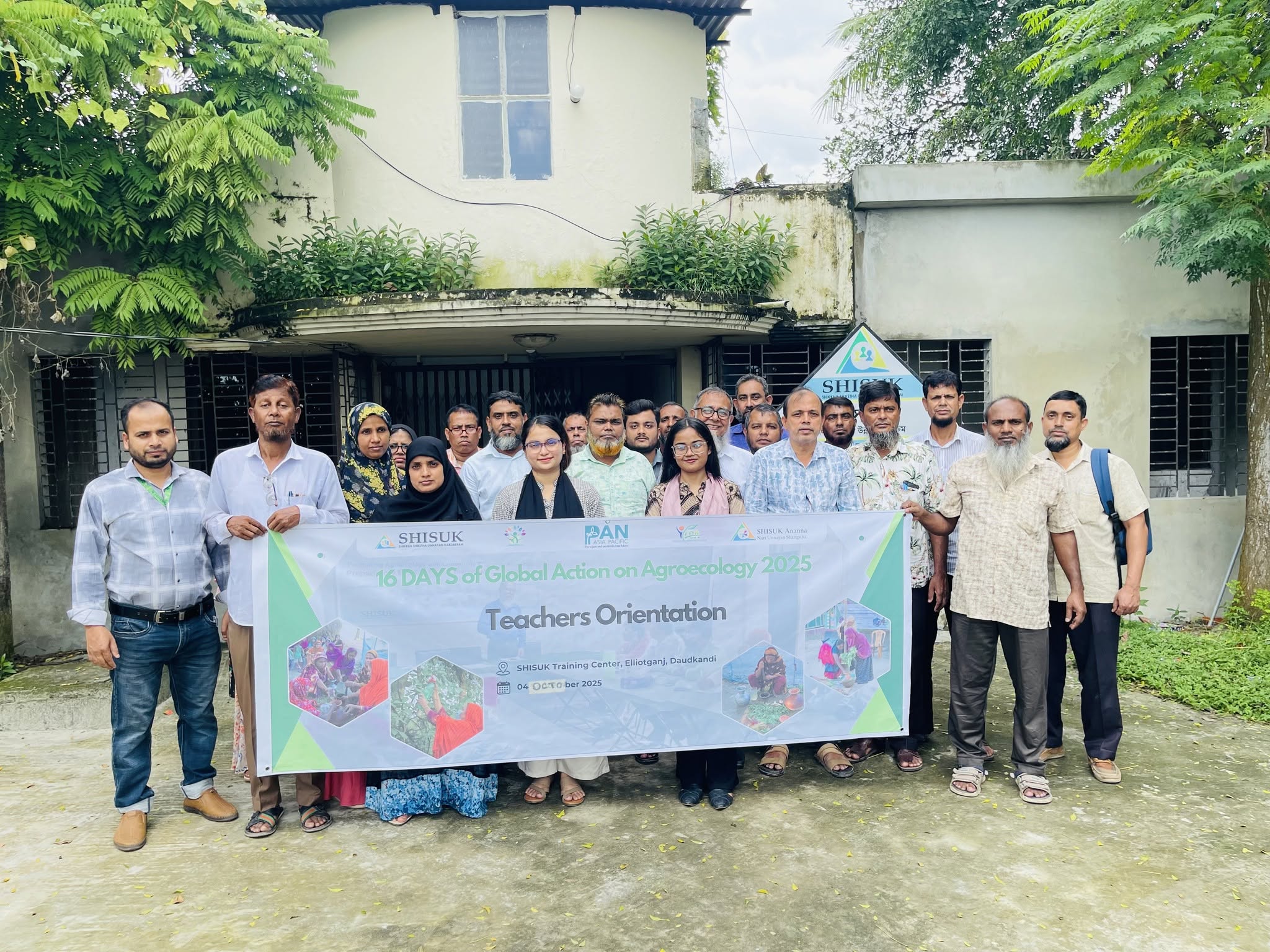
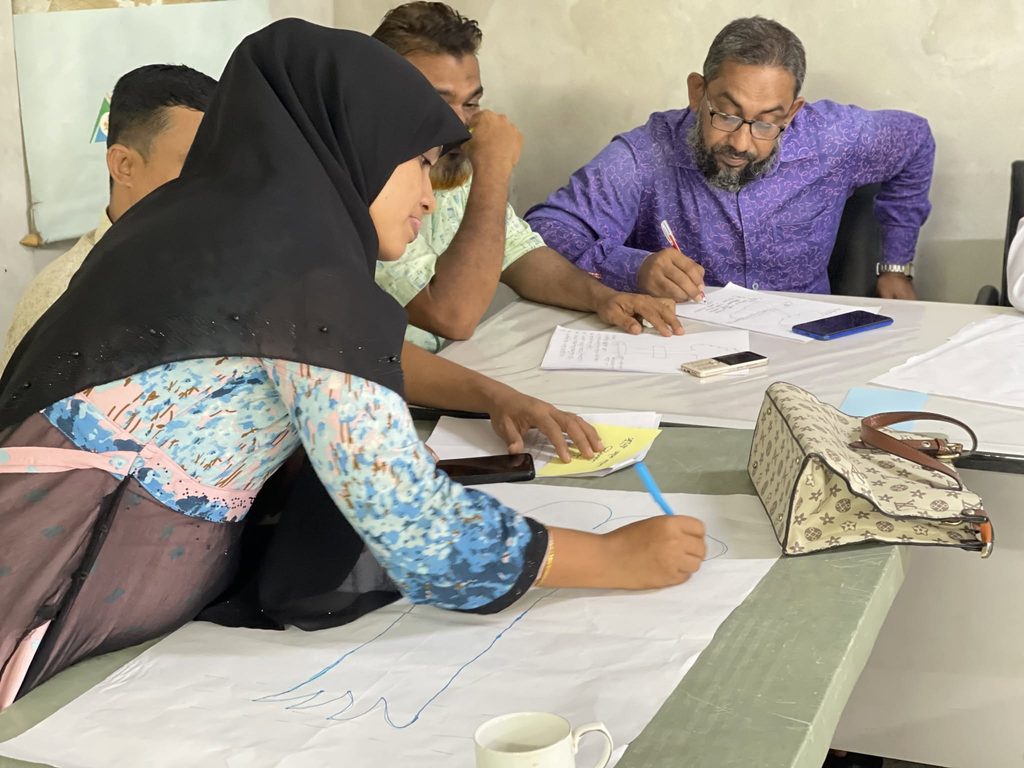
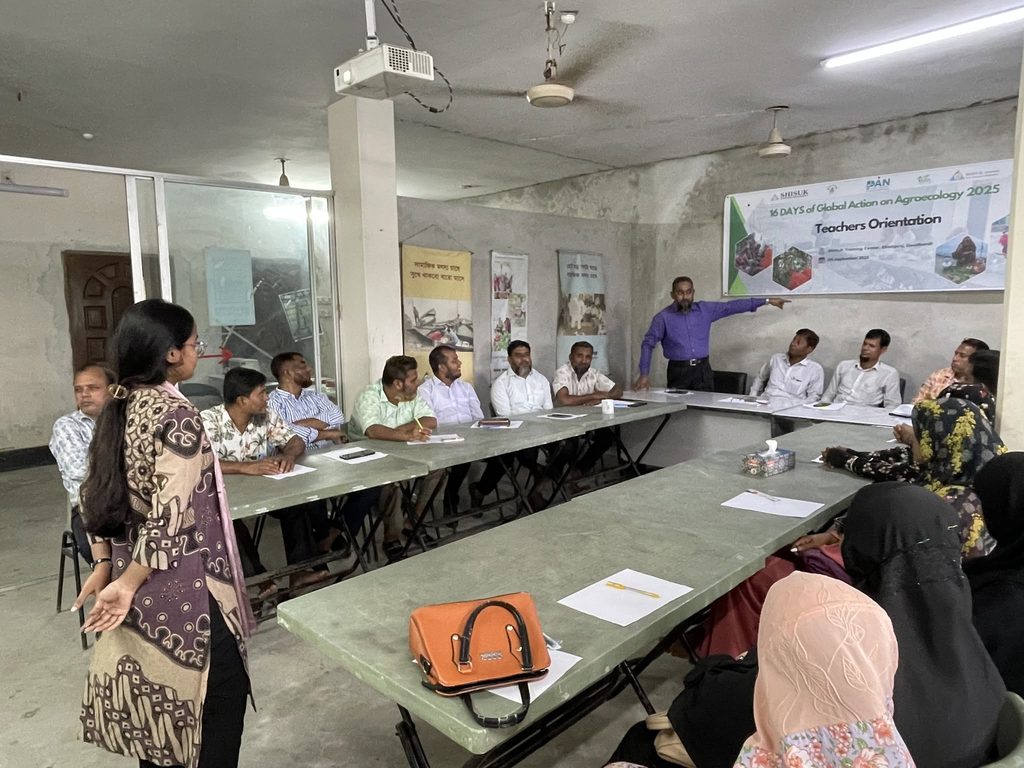
The initiative commenced on October 4, 2025, at the SHISUK Training Center in Daudkandi, convening 26 educators representing 10 local academic institutions. The orientation provided teachers with technical overviews of agroecology, the systemic health hazards of organophosphates and other synthetic inputs, and the mechanics of school-centered buffer zones.
Participating teachers formally adopted a tripartite charter:
- Child Health Protection: Actively monitoring and preventing chemical pesticide applications adjacent to school premises.
- Agroecology Promotion: Integrating safe farming and bio-village concepts into extracurricular student learning.
- 1-km Buffer Advocacy: Coordinating with village leaders and farming households to enforce a 1-kilometer chemical-free perimeter around school boundaries.

Classroom Action and Symbolic Pledges at Daulatpur
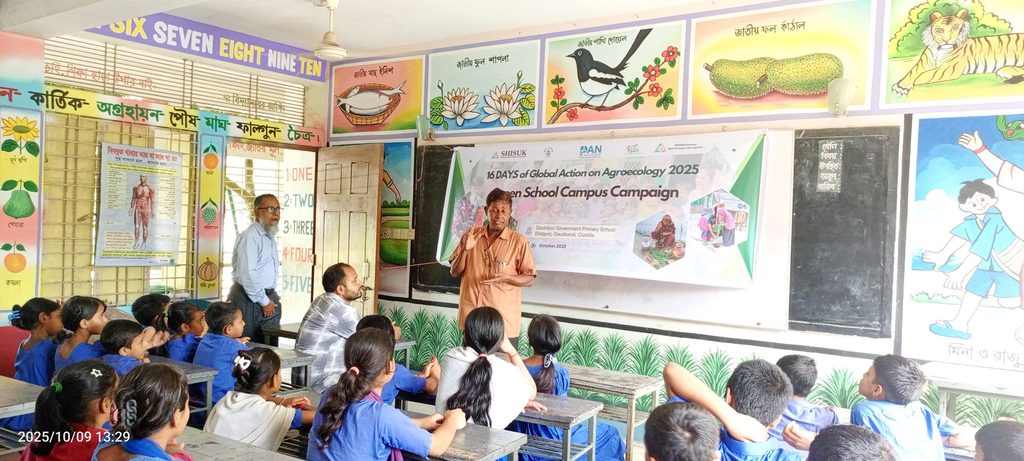
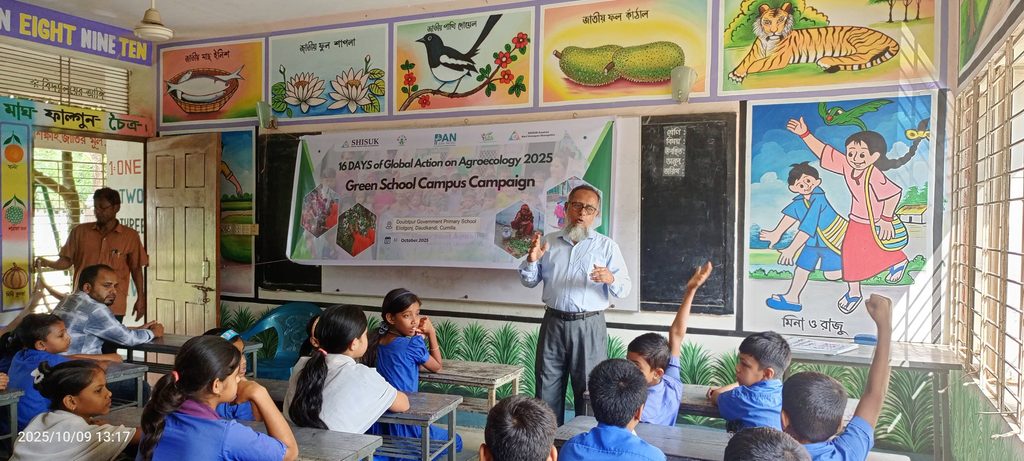
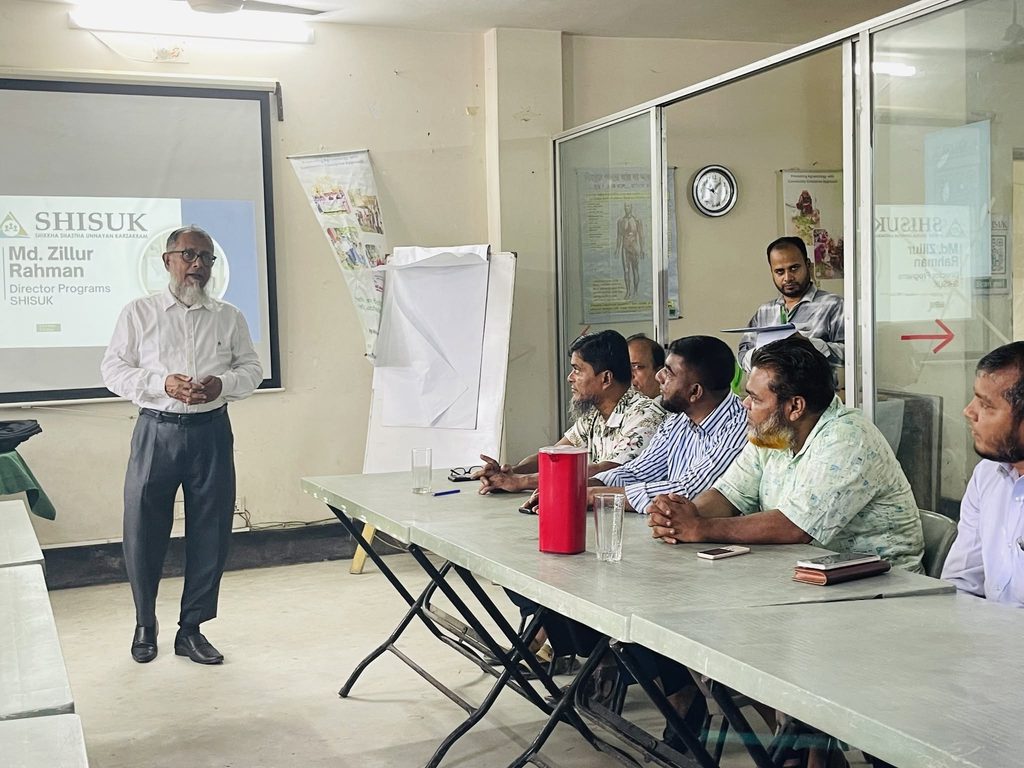
On October 10, the campaign shifted directly into the classroom at Daulatpur Government Primary School. Facilitated by Md. Zillur Rahman, Director of Programs at SHISUK, alongside the school’s Head Teacher, 50 students from classes 3, 4, and 5 participated in an interactive environmental health session.
The discussion translated ecological concepts into actionable community dialogue, encouraging students to act as messengers within their farming households:
- Interactive Learning & Diagnostics: Students explored the pathways of pesticide exposure in drinking water and food, followed by a competitive environmental quiz where top performers received educational gifts.
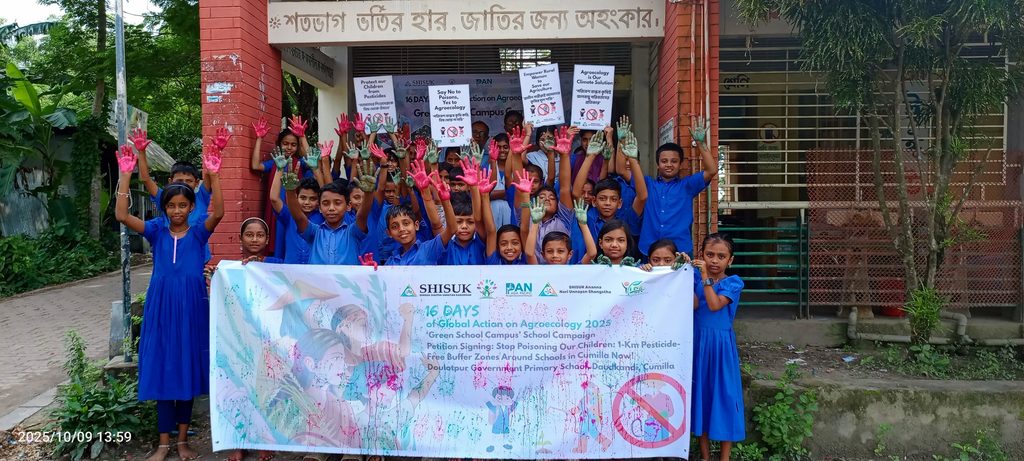
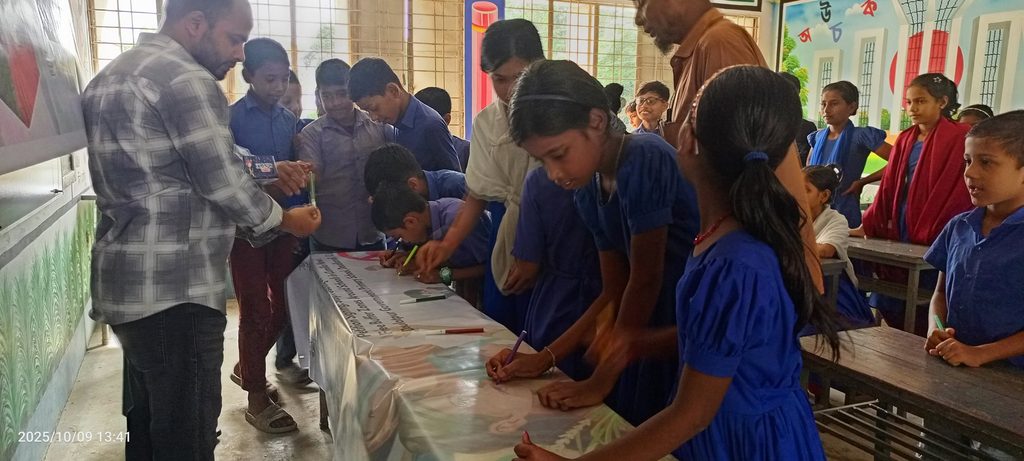
- Mass Signature & Handprint Pledges: Students signed a public declaration advocating for chemical-free school zones. Each participant placed a colored powder handprint on a collaborative canvas, symbolizing their right to grow up free from toxic contaminants.
- Living Buffers: To initiate campus greening and reinforce biodiversity, SHISUK presented and planted four medicinal Arjun (Terminalia arjuna) saplings on the school grounds.
Institutionalizing Community-Led Food Safety
By uniting educators, rural schoolchildren, and local farmers, SHISUK’s Green School Campus Campaign demonstrates how international advocacy frameworks translate into concrete rural protections. Through continued alliance with PANAP, SHISUK is expanding this school-centered model across Daudkandi, leveraging youth awareness to accelerate farmer adoption of bio-pesticides and organic soil stewardship.